Feeds:
Posts
Comments

double vision: Isaiah 42

For an exhibition of the artistic complexity of Isaiah’s ‘servant of the Lord’, one need look no further than the book’s 42nd chapter.

By the time we cross the border into this section, the book called Isaiah has recently informed us that this servant is in some fashion Jacob/Israel:

But you, Israel, my servant, Jacob, whom I have chosen, the offspring of Abraham, my friend (Isaiah 41:8 ESV)

Now the text bolts down that reality by offering strikingly similar descriptions of YHWH’s engagement with the servant at the beginning and end of chapter 2. In between, the prophetic voice calls its audience to new sight, audition, and understanding and simultaneously insists that no population has been as blind or so deaf as this Jacob, this Israel, this servant. Continue Reading »
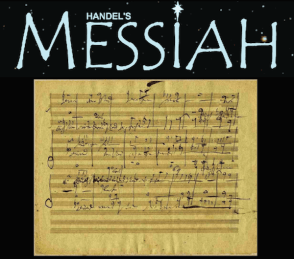
Why is it at once surprising and unsurprising to learn that George Frideric Handel wrote Messiah in one of the lowest moments of his life. England’s debtors’ prisons beckoned and all seemed bleak.

This is but one of the details that Patrick Kavanaugh’s lovingly written introduction to the Handel-Jennens libretto of this most majestic and enduring musical, human, and spiritual accomplishment brings to light. I am listening to yet another rendition of Messiah as I tap out these observations. Solti and the Chicago Symphony Orchestra’s worknwsa-messiah2 is adorned in this case by Kiri te Kanawa, Anne Gjevang, Keith Lewis, and Gwynne Howell. But this is just one of a dozen offerings of Messiah that I might have chosen from Apple’s iTunes offerings on his cold Connecticut evening, proof perhaps that civilization has not ended just yet.

As the author of Spiritual Lives of the Great Composers and Spiritual Moments of the Great Composers, Kavanaugh treats seriously Handel’s religious motivation as indeed the overwhelming spiritual experience of writing Messiah over a period of weeks that the composer himself described in the moment.

We are reminded that King George II of England spontaneously rose when ‘the first notes of the triumphant “Hallelujah Chorus” rang out …” Audiences have been rising ever since.

Hearts too, accompanied sometimes in the life of this listener and of many others by irresistible tears before the sheer force of such a beautiful telling of what Christians believe to be the largest and best story of history.


point of view: Isaiah 37

Isaiah’s 37th chapter puts on display the subtle interplay that is prayer in the moment of crisis.

The threatening king of Assyria may be a cartoonish villain. Nevertheless his shadow casts over little Judah the power of extermination. The Assyrian tyrant is, in a word, invincible. The carcasses of nations that once were, lying with their scorched gods by the side of empire’s highway, bear mute testimony that Assyria and its king are unstoppable.

Judah trembles for good reason, for it would seem that its final hour has come.

As soon as King Hezekiah heard (the threat of the Assyrian emissary), he tore his clothes and covered himself with sackcloth and went into the house of the LORD. And he sent Eliakim, who was over the household, and Shebna the secretary, and the senior priests, covered with sackcloth, to the prophet Isaiah the son of Amoz. They said to him, ‘Thus says Hezekiah, “This day is a day of distress, of rebuke, and of disgrace; children have come to the point of birth, and there is no strength to bring them forth. It may be that the LORD your God will hear the words of the Rabshakeh, whom his master the king of Assyria has sent to mock the living God, and will rebuke the words that the LORD your God has heard; therefore lift up your prayer for the remnant that is left.”‘

The vestige of King Hezekiah’s scrawny hope lies in two realties. First, the prophet may know what to do. There are, as they say, no atheists in foxholes. Continue Reading »

Debido a la calidad de la relación que une a YHVH y al salmista, aún el sufrimiento más insoportable rara vez se distancia de la mano de YHVH.

La teodicea de los salmos—su intento de dar sentido al comportamiento de Dios—es más complejo que simple. El salterio no se permite eliminar la causalidad de la lista de explicaciones que describen la participación de Dios en nuestro dolor. En mi dolor. Continue Reading »

El salmista bíblico posee la sorprendente habilidad de contraponer el gozo de la justos a la desolación del malvado sin incitar una masacre. Involucrar el alma de Israel en su autodefinición ideológica la libera de la necesidad de llevar a cabo la venganza a aquellos que aman el mal o, en algunos casos, a aquellos quienes odian a Sion. YHVH se preocupará por la venganza, los salmos parecen afirmarlo. Nuestro deber es mantener la justicia.

Y regocijarse en YHVH. Continue Reading »

Para el espíritu humano, pocas cosas implican fuerza, estabilidad y firmeza como un árbol. Empleamos sus anillos de crecimiento para establecer el tiempo de eventos que pasaron mucho antes de que naciéramos. Asumimos su presencia aún después de que hayamos marchado. Un árbol mide el pasar de los tiempos que vienen y que van a partir de su sombra, lo que hace que parezcan más pequeños y efímeros. Continue Reading »

Salmo 15: Integridad

David Allen Baer Potter


¿Quién, SEÑOR, puede habitar en tu santuario?

¿Quién puede vivir en tu santo monte?


Sólo el de conducta intachable,

que practica la justicia

y de corazón dice la verdad;

que no calumnia con la lengua,

que no le hace mal a su prójimo

ni le acarrea desgracias a su vecino;

que desprecia al que Dios reprueba,

pero honra al que teme al SEÑOR;

que cumple lo prometido, aunque salga perjudicado;

que presta dinero sin ánimo de lucro,

y no acepta sobornos que afecten al inocente.


El que así actúa no caerá jamás.

(Salmo 15:1–5 NVI)


Tenemos un problema.

Usted no va a creer nada de lo que le voy a decir en esta mañana. Es más, usted no va a creer lo que este salmo nos dice. Continue Reading »

Resiliencia

Servicio Religioso FUSBC

11 julio 2019

Resiliencia


Tengo buenas noticias y tengo malas noticias. ¿Cuáles quieren escuchar primero?

….

Bueno, vamos con las malas:

En algún momento del semestre que en esta semana arranca, usted va a necesitar una resurrección. Lo digo con una cierta confianza, porque la matemática me respalda. Continue Reading »

What have we learned on the road?

Global Forum of Theological Educators

20-23 May 2019, Orthodox Academy of Crete


Χριστός ανέστη! // Christ is risen!

If it should turn out in the fulness of time that the Global Forum of Theological Educators, Verson 2.0 @ the Orthodox Academy of Crete should require a title, a refrain, a remembered rallying cry, a raison d’etre, I believe we will discover it to have been this:

Χριστός ανέστη! // Christ is risen!

We have asked ourselves in these days here in this magnificent location several questions about learners on the way. Continue Reading »

As Jesus’ ministry gathers steam in Luke’s telling, we glimpse the drawing up of battle lines in the three-times-repeated memory that Jesus rebuked a collection of enslaving adversaries.

And in the synagogue there was a man who had the spirit of an unclean demon, and he cried out with a loud voice, ‘Ha! What have you to do with us, Jesus of Nazareth? Have you come to destroy us? I know who you are—the Holy One of God.’ But Jesus rebuked him, saying, ‘Be silent and come out of him!’ And when the demon had thrown him down in their midst, he came out of him, having done him no harm. And they were all amazed and said to one another, ‘What is this word? For with authority and power he commands the unclean spirits, and they come out!’ (Luke 4:33–36 ESV)

The verb that abbreviates Jesus’ belligerent command over the ‘unclean demon’ that holds this unnamed man in bondage is ε͗πιτιμάω (traditionally, to rebuke), supplemented in the people’s astonished after-commentary by ε͗πιτάσσω (usually, to command). As mentioned, Luke deploys ε͗πιτιμάω three times in close proximity, two of them of loud confrontations with demons reluctant to leave their hosts and once of Jesus’ command that an incapacitating fever should leave Simon’s mother-in-law. Continue Reading »