Feeds:
Posts
Comments

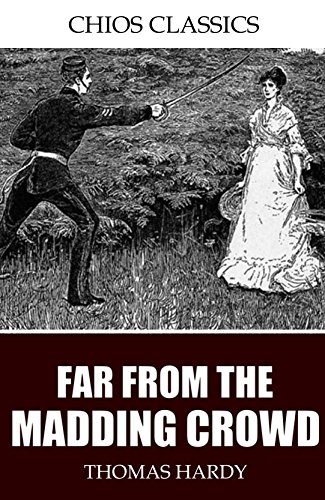
51ksHJ2NUPLI sometimes wonder, trundling along near the end of six decades, how I’ve managed never read Thomas Hardy. Until now.

Prodded on by the marginally satisfactory film version, I downloaded this very English novel. It had me by the throat from its first pages. My wife and I are now, in consequence, listening to a spoken version of Tess of the d’Urbervilles. Thomas Hardy gets quickly to the reader’s heart.

Far from the Madding Crowd is a tragic tale that somehow ends in deep comedy. Only after all its protagonists have loved (nobly or not) on to their own injury does the joyful denouement begin to come into view. Along the way, Hardy shows himself to be the kind of novelist who can capture more human observation in a dependent clause than many of us manage in a lifetime.

I’m hooked. Continue Reading »
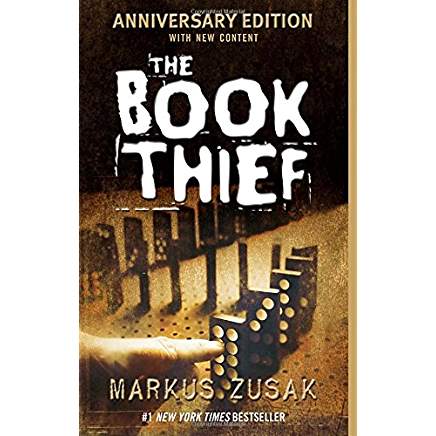
With a heart full to overflowing and eyes quite moist, I finish this novel of a young waif 51LK1NgAk6L._AC_US436_QL65_of a girl in Hitler’s Germany whose body, soul, and spirit ought never have survived her furnace of affliction. Yet survive she does, grittily and even poetically, with the aid of a good friend, a tender father, a Jewish refugee in the basement, a mother whose harshness runs only skin keep, and a traumatized mayor’s wife who loves to have her books stolen.
As the old proverb—old but still true for all its rusty years—would tell us, ‘The book is far better than the movie’. This has never been more true than with Markus Zusak’s phenomenal achievement.

The book is narrated by Death, the Grim Reaper. Yet he is not an evil presence, indeed his tender observations are endearing. In the end, the circumstances of 1940s Europe keep him far busier than he’d prefer. Yet he cannot take his eyes off these dismal, glorious humans. Continue Reading »

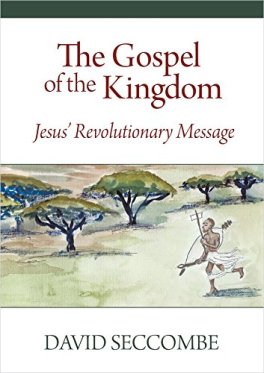
511492nmk9LWhen Australian New Testament scholar and educator David Seccombe writes about ‘Jesus’ revolutionary message’ (the subtitle of The Gospel of the Kingdom), it is almost inevitable that he should set out a two-part arrangement that puts one in mind of the apostle Paul: ‘What is the Gospel?’ and ‘Proclaiming the Gospel’.
This is so because Seccombe’s scholarly gifts have always been deployed in the interests of people and churches whom the author longs to see brought into redemptive, joyous, and invigorating relationship with Jesus Christ. A gospel minutely defined and delimited but not preached, lived, and taught would fall short of Seccombe’s ambition.

So in thirteen spritely chapters, in the course of which Seccombe wears his scholarship lightly but not without effect, we are asked to think again—or even for the first time—about the nature of the strange news that intruded into human discourse by means of Jesus’ life and teaching. Continue Reading »

La brillante narrativa de la resurrección nacional de Judá en el sexagésimo capítulo del Libro de Isaías está poblada con vislumbres de la contribución de las naciones al embellecimiento de Jerusalén.

Parece que las naciones distantes que fluyen a la glorificada Sion llevan no sólo a los niños perdidos desde hace mucho tiempo de Jerusalén como estos quienes finalmente llegan a casa. A medida que los pueblos remotos ‘llegan a la luz (de Sion) y los reyes al resplandor de (Sion) ’, también traen consigo el producto más rico de su cultura y economía. Ellos importan a la ciudad ahora glorificada la ‘abundancia del mar’ (המון ים) y la  ‘riqueza de las naciones’ (חיל גוים), incluso la representativa ‘gloria del Líbano’ (כבוד הלבנון). Continue Reading »

Pocas de las declaraciones del libro de Isaías acerca del ‘siervo del Señor,’ están tan densamente pobladas como la sección rica en imágenes al inicio de Isaías 49:

Escúchenme, costas lejanas,  oigan esto, naciones distantes: El Señor me llamó antes de que yo naciera, en el vientre de mi madre pronunció mi nombre. Hizo de mi boca una espada afilada, y me escondió en la sombra de su mano; me convirtió en una flecha pulida, y me escondió en su aljaba. Me dijo: «Israel, tú eres mi siervo; en ti seré glorificado». Y respondí: «En vano he  trabajado; he gastado mis fuerzas sin provecho alguno. Pero mi justicia está en manos del Señor; mi recompensa está con mi Dios».

 Y ahora dice el Señor, que desde el seno materno me formó  para que fuera yo su siervo, para hacer que Jacob se vuelva a él, que Israel se reúna a su alrededor; porque a los ojos del Señor soy digno de honra, y mi Dios ha sido mi fortaleza: «No es gran cosa que seas mi siervo, ni que restaures a las tribus de Jacob, ni que hagas volver a los de Israel, a quienes he preservado. Yo te pongo ahora como luz para las naciones, a fin de que lleves mi salvación hasta los confines de la tierra». (Isaías 49:1-6 NVI).

Primero, tenemos una expresión de profunda intimidad entre el siervo y YHWH. Esto se hace explícito en todo el pasaje, pero el lector no debe perder su expresión implícita en las primeras palabras del pasaje. La invocación inicial (‘escúchame… presta atención’) es a veces ofrecida en el libro de Isaías por el profeta con la declaración inmediatamente siguiente que ‘YHWH ha hablado’. En otras ocasiones YHWH mismo utiliza esta expresión convocatoria él mismo. Continue Reading »

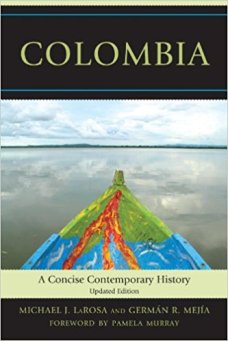
51f38SlZnUL._SX331_BO1,204,203,200_Across ten chapters organized thematically rather than chronologically, Michael J. LaRosa and German R. Mejía present this fine English-language history of Colombia in accessible prose that only occasionally belies that they were writing or thinking initially in Spanish before making this considerable gift to the English reading public.
The line-up of chapter titles arguably serves as LaRosa’s and Mejía’s first promise that their history will not weep over a fragmented and violent nation, but rather will sketch the contours of a nation seeking unity, nourished by a certain dynamism, and eager—or perhaps more often merely destined—to find its place in the world:

  • ‘Origins’
  • ‘The Colombian Nations’
  • ‘The Dynamics of a Political Community’
  • ‘The Cadence of Unity’
  • ‘Conflict’
  • ‘Economic Unity’
  • ‘A Common Space’
  • ‘Cultural Dynamism’
  • ‘Daily Life’
  • ‘Colombia and the World’

The book’s first chapter (‘Origins’) establishes the case for autonomy and then independence from Spain on the awkward fact that Spanish plans for that European nation’s ‘American’ colonies would always leave the ‘creoles’ at a disadvantage over peninsular interests. The detail that this history begins with post-Columbian political reorganization rather than the pre-Columbian ‘given’ that the Spanish conquerers encountered is perhaps symptomatic of the concise nature of the work. It is also programmatic of history and of this particular narrative that ‘Colombia’ was born in blood and contest, a genesis that wants to extend its hegemony—but in LaRosa’s and Mejía’s telling, does not finally succeed—from the beginning through to the end of the nation’s story. In this North American reader’s opinion, the authors make the eventual Colombian state’s post-Encounter pre-history understandable in broad brush and via analogies with a North American historical experience that is more familiar to the book’s English readership. Continue Reading »

Los días oscuros antes de la destrucción de Israel por el poder de Asiria, dejaron a pocos intactos. Incluso los niños.

Luego el Señor me dijo: «Haz un letrero grande y escribe con claridad el siguiente nombre: Maher-salal-has-baz[a]». Les pedí al sacerdote Urías y a Zacarías, hijo de Jeberequías, ambos conocidos como hombres honrados, que fueran testigos de lo que yo hacía.

Después me acosté con mi esposa y ella quedó embarazada, y dio a luz un hijo. Y el Señor me dijo: «Ponle por nombre Maher-salal-has-baz. Pues antes de que este hijo tenga edad suficiente para decir “papá” o “mamá”, el rey de Asiria se llevará la abundancia de Damasco y las riquezas de Samaria». (Isaías 8:1-4).

Cuando el profeta fija este sobrenombre sombrío a su bebé, él señala la inminente destrucción de los vecinos amenazantes de Israel. El nombre significa  ‘Pronto al saquéo, rápido al botín ’. Continue Reading »

Sería erróneo decir que las estructuras y patrones de culto y liturgia, carecen de valor en el legado de un profeta bíblico como en el caso de Isaías. De hecho, algunas de las expresiones más agitadas de parte del profeta respecto a la redención de YHWH de Israel prometen la  impactante integración al culto de los extranjeros y los mutilados, personajes que fueron convencionalmente excluidos.

Sin embargo, en el párrafo final del libro, YHWH parece completamente indiferente a digamos, un templo construido para su reposo. Él podría hacer por sí mismo mil de estos si el capricho lo empujara.

Jehová ha dicho: «El cielo es mi trono y la tierra el estrado de mis pies. ¿Dónde está la casa que me habréis de edificar? ¿Dónde el lugar de mi reposo?Mi mano hizo todas estas cosas, así todas ellas llegaron a ser», dice Jehová. «Pero yo miraré a aquel que es pobre y humilde de espíritu y que tiembla a mi palabra.» (Isaías 66:1–2 RVR95)

Cada vez que Isaías asalta la religión y su observancia litúrgica, lo hace por una de dos razones. O bien el profeta declara inútil el desempeño ritual en ausencia de una ética digna del pueblo de YHWH. O, por el contrario, está elevando algo de  mayor valor que la observancia cultual, por buena que ésta es. Continue Reading »

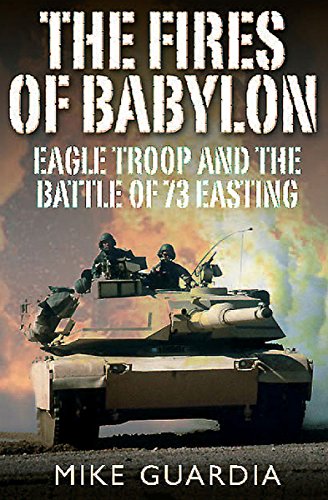
In a political era when scandalously few of the United States’ political leaders have beenshaped by military service, this b51K4gjfgdKLook provides a fascinating look at a formative moment in the career of HR McMaster, who as this reviewer sets pen to paper serves as the country’s National Security Advisor.
The brief survey of an armored battle that takes pride of place in a world that sees few such large-scale engagements of tanks tells as well the satisfying story of the U.S. Military’s improbable feat of transformation from post-Vietnam malaise through to the disciplined, strategically minded force that destroyed Saddam Hussein’s forces in the First Gulf War (1990-91).

Guardia’s Fires of Babylon chronicles the U.S. Army’s pivot from an anti-Soviet blocking mission that had lost its relevance by the time the Berlin Wall crumbled to a highly fluid challenge from operating positions in Saudi Arabia, Kuwait, and eventually Iraq itself. It was commanders like McMaster (a Captain at the time of 73 Easting) who brought the discipline and savvy that produced overwhelming military success against an Iraqi force that was judged to be capable of kicking butt on the battlefield. In the end, only one butt got kicked in an epic slaughter that could have led to the removal of Saddam but for the political considerations that led the first President Bush to pull up short. Continue Reading »

Isaías no es tanto el heraldo de comienzos poco probables, como él es el profeta de re-ediciones poco prometedoras.

Su interés idiosincrásico no es la historia de los orígenes, pero más bien es la anticipación de las cosas muertas que surgen en silencio a la vida. En el capítulo 11 del libro que lleva su nombre, el profeta asume la destrucción de la monarquía davídica. Habiendo hecho esto, este oráculo convincente se remonta a Isaí, el padre de David, el antecedente pastoral de reyes y reinos. Es como si un nuevo comienzo requiriera una retirada radical al momento antes de que la larga trayectoria de la decepción israelita en sus reyes se hubiera disparado sobre su arco tortuoso.

Y brotará un retoño del tronco de Isaí, y un vástago de sus raíces dará fruto. Y reposará sobre El el Espíritu del Señor, espíritu de sabiduría y de inteligencia, espíritu de consejo y de poder, espíritu de conocimiento y de temor del Señor. Se deleitará en el temor del Señor, y no juzgará por lo que vean sus ojos, ni sentenciará por lo que oigan sus oídos; sino que juzgará al pobre con justicia, y fallará con equidad por los afligidos de la tierra; herirá la tierra con la vara de su boca, y con el soplo de sus labios matará al impío. La justicia será ceñidor de sus lomos, y la fidelidad ceñidor de su cintura. (Isaías 11:1-5 LBLA).


Este vástago sin nombre de la casa de Isaí emerge de un árbol muerto, cortado hasta el  tocón y dejado para pudrirse en medio del bosque de reinos que no funcionaron. Continue Reading »