An odd sensation grips this reader as he negotiates Zakaria’s 2008 cheerfully globalist  work (an updated edition appeared in 2012) in the Era of Trump amid the Rise of the New Nationalisms. As a sympathizer with Zakaria’s internationalism, I acknowledge that the sureties he dispenses are now all contested. Or, perhaps, shouted down. We are the worse for it.
Everybody’s rising. Or almost everybody.
This is the opening shot of Zakaria’s Post-American World, for he argues in his first chapter (‘The Rise of the West’) that modern history has seen three great risings: that of the Western World, that of America, and—under our feet—the rise of the rest. Zakaria’s globalist outlook is evident from the start:
Power is shifting away from nation-states, up, down, and sideways. In such an atmosphere, the traditional applications of national power, both economic and military, have become less effective … At the politico-military level, we remain in a single-super-power world. But in every other dimension—industrial, financial, educational, social, cultural—the distribution of power is shifting, moving way from American dominance. That does not mean were are entering an anti-American world. But we are moving into a post-American world, one defined and directed from many places and by many people.
If this sounds threatening to, say, American readers, well, that’s the problem!, Zakaria might say. We have won the battle of ideas and structures, but we cower like losers. Continue Reading »
 I sometimes wonder, trundling along near the end of six decades, how I’ve managed never read Thomas Hardy. Until now.
 of a girl in Hitler’s Germany whose body, soul, and spirit ought never have survived her furnace of affliction. Yet survive she does, grittily and even poetically, with the aid of a good friend, a tender father, a Jewish refugee in the basement, a mother whose harshness runs only skin keep, and a traumatized mayor’s wife who loves to have her books stolen.
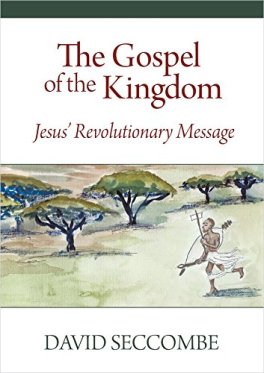 When Australian New Testament scholar and educator David Seccombe writes about ‘Jesus’ revolutionary message’ (the subtitle of The Gospel of the Kingdom), it is almost inevitable that he should set out a two-part arrangement that puts one in mind of the apostle Paul: ‘What is the Gospel?’ and ‘Proclaiming the Gospel’.
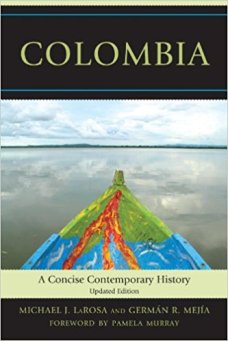 Across ten chapters organized thematically rather than chronologically, Michael J. LaRosa and German R. Mejía present this fine English-language history of Colombia in accessible prose that only occasionally belies that they were writing or thinking initially in Spanish before making this considerable gift to the English reading public.
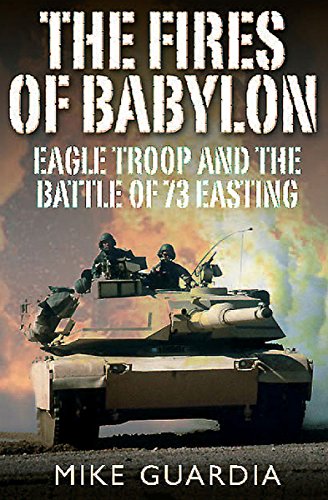 ook provides a fascinating look at a formative moment in the career of HR McMaster, who as this reviewer sets pen to paper serves as the country’s National Security Advisor.


 Canter Bridge