Feeds:
Posts
Comments

Jim O’Donnell’s ‘spiritual memoir’ turns its unique corner in 1984, the year he met41tcQ5VTpeL._SY346_ Arthur.
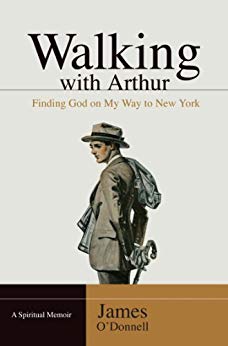
Jim did not much like himself in 1984 and, by all accounts, with good reason. He liked other people even less.

Arthur was gentle and kind and honest. Very, very honest. He also seemed to know God, whatever that was supposed to mean to a high-flying investment banker like Jim O’Donnell, not a very nice man, but a better man that anyone else he knew.

Everything changed then, because Arthur asked and Jim said, ‘Well, OK, then. I guess.’ Or something like that.

The rest is history. Or future. It depends on your point of view.

This book is a page-turner for anyone not too cynical to wonder how guys like Old Jim become guys like, well, Jim now.

Sometimes there is an Arthur. Arthurs are as surprised as anybody that stuff like this happens.

Read on.
Perhaps the rabbis were correct to affirm that some of the ‘deeper writings’ are not suitable for untrained eyes. Or perhaps the cynical proverb that affirms that ‘school is wasted on the young’ is, after all, on to something.

Or perhaps only mothers and fathers should read such a thing as this:

Therefore thus says the LORD, who redeemed Abraham, concerning the house of Jacob: ‘Jacob shall no more be ashamed, no more shall his face grow pale. For when he sees his children, the work of my hands, in his midst, they will sanctify my name; they will sanctify the Holy One of Jacob and will stand in awe of the God of Israel. And those who go astray in spirit will come to understanding, and those who murmur will accept instruction.’ (Isaiah 29:22–24 ESV)

Jacob’s prodigals had not only run amok on their own terms. They had been dragged to distant lands by the powers of their day to suffer the quick extermination of our news cycle or the slow extermination of assimilation to the alien’s ways. Continue Reading »

We rarely receive the moment of our lives on our terms.

Almost always, the line in the sand is drawn a beach or two away from where we would have preferred. The defining issue is seldom of our choosing.

After these things King Ahasuerus promoted Haman the Agagite, the son of Hammedatha, and advanced him and set his throne above all the officials who were with him. And all the king’s servants who were at the king’s gate bowed down and paid homage to Haman, for the king had so commanded concerning him. But Mordecai did not bow down or pay homage. Then the king’s servants who were at the king’s gate said to Mordecai, ‘Why do you transgress the king’s command?’ And when they spoke to him day after day and he would not listen to them, they told Haman, in order to see whether Mordecai’s words would stand, for he had told them that he was a Jew. And when Haman saw that Mordecai did not bow down or pay homage to him, Haman was filled with fury. (Esther 3:1–5 ESV)

The biblical Book of Esther is full of fools. Yet none of them outdoes the legendary Haman the Agagite, who figures in the book’s troublesome narrative as a kind of Fool of All Fools. He is an idiot prince, this Haman, a man whose self-absorbed banality is surpassed only by the arrogance that fuels his rise. Continue Reading »

Before all things, we protect our children.

The park just outside my window is frequented by parents and small children, these defenseless little tykes who would not know a leaf from a wasp. Nor do we expect them to know. So, we cradle them in our arms against all threat unseen. We swoop them low to greet the neighbor’s little doggy, though we would not have them crawl beside the four-legger, for who knows what strange ferocity might kick in suddenly in a world like ours.

We expose them gradually to our little park, one that is in the main benign but might harbor here or there a sting, a bite, a lecher too kind. Continue Reading »

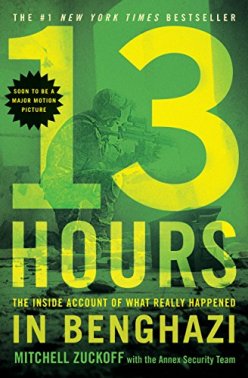
51Fqa6xp4SLBecause of the highly politicized swirl around ‘what happened in Benghazi’, I expected that a good portion of Mitchell Zuckoff’s narrative would be rooted in Washington.

It is not. Instead, the author works with the surviving members of the Annex Security Team to provide a blow-by-blow account of how the events went down, along with significant and what appears to this reader to be highly responsible interpretation of their meaning in the moment.

Although one can discern a certain casual lethargy ‘back home’, the only person who comes in for consistent derision is ‘Bob’, the on-location CIA base chief who for reasons highly related to his ongoing cellphone conversations would not allow the Annex Security Team to do its belligerent job as soon as the lightly secured U.S. Diplomatic Base in Benghazi—within earshot just a short distance away—was breached with lethal intent.

Continue Reading »

Chinua Achebe’s terse, unromantic narrative of one man, one-and-a-half clans, and two 61spl57YceL._SS300_moments (precolonial and incipient colonial), set in an African village, scrupulously avoids moralistic evaluation. Instead, the strong but flawed gait of a too proud man carries the reader along though the ambiguities of tribal life and the arrival of a Western-led Christian church.

The reader surmises quite early that hope hangs on an unlikely scenario where reconciliation of the protagonist with himself, with his clan, and with the newcomers could somehow take place in the alternately shadowed and sunlit landscape that gathers all of these into an unsought encounter.

In the end, hope itself hangs, too sadly, too finally, too inexplicably for this reader’s heart to re-settle as quickly as it would like.

Superb.

One of the most finely crafted and resonant chapters of the biblical corpus achieves its quiet doxology via a horticultural simile, which catches this reader’s eye on the morning after hauling yet another load of subtropical greenery to our Colombian patio.

For as the earth brings forth its sprouts, and as a garden causes what is sown in it to sprout up, so the Lord GOD will cause righteousness and praise to sprout up before all the nations. (Isaiah 61:11 ESV)

The author has in the preceding verses gone a bit crazy in the search for metaphors that capture the extravaganza of YHWH’s turning towards his people after the ‘brief moment’ of their affliction. Now, they are walls called ‘salvation’, rebellious citizens will have become ‘the righteous’, the oil of gladness will have displaced mourning, Zion’s children will have become famous throughout the world. Continue Reading »

YHWH’s blessing comes not as a single product, well-worn branding splashed across familiar package.

Rather, it sneaks into life variegated, diverse, subtle, nuanced, its hues settling in across the broadest range.

Instead of bronze I will bring gold, and instead of iron I will bring silver; instead of wood, bronze, instead of stones, iron. I will make your overseers peace and your taskmasters righteousness. (Isaiah 60:17 ESV)

The prophet reaches for a poet’s pallet to explain to a weary people why return to all that once was and has been snatched away beyond repair will be more glorious than a captive nation can just now imagine. The cadence of his Hebraic persuasion does indeed speak of shining extremity, for example in the ‘wealth of nations’ that will flow to resplendent Zion, in the transmutation of empty abandon into urban majesty. Continue Reading »

Insondable

Servicio religioso FUSBC, 26 julio, 2018


¡Qué profundas son las riquezas de la sabiduría y del conocimiento de Dios! ¡Qué indescifrables sus juicios e impenetrables sus caminos! (Nuestra amiga la Reina Valera ofrece una alternativa a esta última exclamación del apóstol: ‘¡Cuán insondables son sus juicios e inescrutables sus caminos!’) «¿Quién ha conocido la mente del Señor, o quién ha sido su consejero?» «¿Quién le ha dado primero a Dios, para que luego Dios le pague?» Porque todas las cosas proceden de él, y existen por él y para él. ¡A él sea la gloria por siempre! Amén.

(Romanos 11:33–36 NVI)

    *       *       *

Pareciera que la realidad y el dialecto de la Biblia Hebrea cobran mucha fuerza en la vida del apóstol Pablo. Lo digo porque, a la luz de su experiencia de Cristo, él apóstol no puede sino replicar la cadencia poética de tantos brotes de alabanza que él conoce a partir de esos rollos antiguos.

¡Qué indescifrables sus juicios e impenetrables sus caminos! … dice con paralelismo hebreo a pesar de estar escribiendo en griego … ¡Cuán insondables—sabroso el vocablo … ¡Cuán insondables son sus juicios e inescrutables sus caminos!

Y, sin embargo, aquí estamos … estudiantes, profesores, administradores de un seminario bíblico, donde semana en semana … asignatura en asignatura … a lo largo de nueve semestres (o diez … u once …) sudamos precisamente para sondar sus juicios y sujetar sus caminos a nuestro escrutinio. Continue Reading »

41DqbK37PdL._SS300_I held this little puppy in my hand after about five pencil sharpenings, and I says to myself, ‘Self, this is simple, effective, strong, and European-modern. I bet it speaks German.’

Turn it over and read: ‘Staedtler/Noris, Germany’

It’s not a Bimmer. But it’s German-made pencil sharpener at two for $3.69.

Look no further.