Feeds:
Posts
Comments

Salmo 15: Integridad

David Allen Baer Potter


¿Quién, SEÑOR, puede habitar en tu santuario?

¿Quién puede vivir en tu santo monte?


Sólo el de conducta intachable,

que practica la justicia

y de corazón dice la verdad;

que no calumnia con la lengua,

que no le hace mal a su prójimo

ni le acarrea desgracias a su vecino;

que desprecia al que Dios reprueba,

pero honra al que teme al SEÑOR;

que cumple lo prometido, aunque salga perjudicado;

que presta dinero sin ánimo de lucro,

y no acepta sobornos que afecten al inocente.


El que así actúa no caerá jamás.

(Salmo 15:1–5 NVI)


Tenemos un problema.

Usted no va a creer nada de lo que le voy a decir en esta mañana. Es más, usted no va a creer lo que este salmo nos dice. Continue Reading »

Resiliencia

Servicio Religioso FUSBC

11 julio 2019

Resiliencia


Tengo buenas noticias y tengo malas noticias. ¿Cuáles quieren escuchar primero?

….

Bueno, vamos con las malas:

En algún momento del semestre que en esta semana arranca, usted va a necesitar una resurrección. Lo digo con una cierta confianza, porque la matemática me respalda. Continue Reading »

What have we learned on the road?

Global Forum of Theological Educators

20-23 May 2019, Orthodox Academy of Crete


Χριστός ανέστη! // Christ is risen!

If it should turn out in the fulness of time that the Global Forum of Theological Educators, Verson 2.0 @ the Orthodox Academy of Crete should require a title, a refrain, a remembered rallying cry, a raison d’etre, I believe we will discover it to have been this:

Χριστός ανέστη! // Christ is risen!

We have asked ourselves in these days here in this magnificent location several questions about learners on the way. Continue Reading »

As Jesus’ ministry gathers steam in Luke’s telling, we glimpse the drawing up of battle lines in the three-times-repeated memory that Jesus rebuked a collection of enslaving adversaries.

And in the synagogue there was a man who had the spirit of an unclean demon, and he cried out with a loud voice, ‘Ha! What have you to do with us, Jesus of Nazareth? Have you come to destroy us? I know who you are—the Holy One of God.’ But Jesus rebuked him, saying, ‘Be silent and come out of him!’ And when the demon had thrown him down in their midst, he came out of him, having done him no harm. And they were all amazed and said to one another, ‘What is this word? For with authority and power he commands the unclean spirits, and they come out!’ (Luke 4:33–36 ESV)

The verb that abbreviates Jesus’ belligerent command over the ‘unclean demon’ that holds this unnamed man in bondage is ε͗πιτιμάω (traditionally, to rebuke), supplemented in the people’s astonished after-commentary by ε͗πιτάσσω (usually, to command). As mentioned, Luke deploys ε͗πιτιμάω three times in close proximity, two of them of loud confrontations with demons reluctant to leave their hosts and once of Jesus’ command that an incapacitating fever should leave Simon’s mother-in-law. Continue Reading »

There is a fruitful agony, a suffering that bears life rather than merely pushing open the door to death. Jesus’ agony was of this kind, in spades we might say in retrospect and from the angle of hope’s full flowering.

Yet the moment left its early evidences as well.

And when they had mocked him, they stripped him of the purple cloak and put his own clothes on him. And they led him out to crucify him.

And they compelled a passerby, Simon of Cyrene, who was coming in from the country, the father of Alexander and Rufus, to carry his cross. And they brought him to the place called Golgotha (which means Place of a Skull). (Mark 15:20–22 ESV)

As many have noted, Mark’s narrative mentions two names that don’t much illuminate the crisis of the moment: Alexander and Rufus. Continue Reading »

What have we heard?

ICETE Triennial Listening Team report

2 November 2018

The earth is the Lord’s and the fullness thereof, the world and those who dwell therein. (Ps. 24.1 ESV)

This is the note that has been sounded, at least as the psalmist might well have expressed it were he listening in, during these days together in Panama.

While that note has rung, in plenary addresses and workshops and mealtime conversations and walks along this ocean that YHWH has created for his enjoyment and for ours, a group of your friends has been listening in as well.

I think I’d better explain … Continue Reading »

By way of his ambitious Living as the People of God (1983), Christopher Wright attempted61B2R7pA2mL._SY346_
to address the paucity of serious reflection on Old Testament ethics by providing ‘a comprehensive framework within which Old Testament ethics can be organized and understood.’ The intervening two decades between the book’s original publication and the 2004 updating of that work as Old Testament Ethics for the People of God had witnessed a florescence of writing on the topic. While the reawakening of popular and scholarly interest in Old Testament ethics is to be welcomed, no part of it lessens the value of Wright’s enduring ‘comprehensive framework’.

Wright has inherited from his mentor, the late John R.W. Stott, the knack for wrestling complexity into clarity without lurching into simplistic reductions. Already in the book’s introduction, we see evidence of this in Wright’s ‘ethical triangle’: 

God, Israel and the land—these were the three pillars of Israel’s worldview, the primary factors of their theology and ethics. We may conceptualize these as a triangle of relationships, each of which affected and interacted with both the others. So we can take each ‘corner’ of this triangle in turn and examine Old Testament ethical teaching from the theological angle (God), the social angle (Israel), and the economic angle (the land).

Wright apologizes, even if not fervently, for the absence of the individual that some readers will note in this schema. Yet in this reader’s estimation, that missing individual will show his or her face often enough in the pages that follow, particularly when one is poised at the ‘social angle’ corner of Wright’s admittedly artificial but nonetheless instructive triangle. Continue Reading »
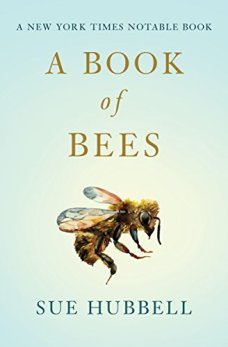
41TErMtvHSLHow does a book like this even happen?

Sue Hubbell loves her Ozarks and the people who live there, loves her bees, and by all appearances has a thing going with words and the art of stringing them together. It seems that beekeepers now join flyfishers as unlikely creators of great writing.

Who knew?

Hubbell weaves her tales of bees and sweet countryside around the four seasons of her craft. This makes for four long chapters, perhaps the only defect in an otherwise enchanting read. Along the way we learn a fair piece about keeping bees (much of it in the ‘let them be bees’ category). We also taste and feel the Missouri seasons and warm to the spirit of a woman who has learned to live so well in her adopted countryside.

The result is a book worth reading at least twice. Then, after a rest, perhaps a third time.

Somehow the book’s simple title perfectly frames the easy lilt of its prose. Nothing is difficult here. Just beautiful.

In a season when a determined minority of parents are happy to say that the mass-51uoveg1vTL._AC_UL640_QL65_education emperor has no clothes, it is good to have this little manual from Dorothy Sayers’ pen to provide a well-grounded model of what a real emperor just might look like, fully clothed.

A portion of this 1947 broadside (for in spite of its exquisitely respectful prose, this is precisely what it was) by a British classicist and novelist is that Sayers sounds as though she is writing in early 21st-century America. Via an argument that fast-forwards with magnificent ease, she dares to suggest that Western culture has in a sense gone mad and is employing the mechanics of education to assure that its children remain just as loony as their parents. In other words, Lost Tools is a polemic against those who are responsible for the misplacement of the darned things and/or committed to their non-discovery.

Sayers thinks that education was once done well in the West, and that its hammer, saw, and chisel are recoverable with a bit of effort.  Continue Reading »

51cgEgMuAnL._SX328_BO1,204,203,200_It is a fortunate and powerful thing moment when a thinker trained for policy analysis finds his voice as a story-teller. That Ian Toll has lent that voice to narrating events in ‘the other war’ is a profound boon.

The persistent thread around which Toll weaves his story of the early war in the Pacific is the Alfred Thayer Bahan doctrine of concentration and battle wagons. The weaving is a subtle art in Toll’s hands, because the astonishingly brief moment between Pearl Harbor and Midway both debunked Bahan’s confidence in the battleship and proved that even Japan’s naval might was fallible when deployed without due concentration.

The author has delved deep into the minds of both Japanese and American warriors, from deck-swabbers and lowly engineers to admirals and their quirks. The result is a profoundly respectful telling, one that never allows the reader to forget that both strategy and humanity were as fully in play as it is possible to imagine. Continue Reading »