Feeds:
Posts
Comments

From this reviewer’s, anything with the late David Halberstam’s name on it is ipso facto a worthy read. This aching recounting of a war no one saw coming and nearly everybody forgot is no exception.

51zmq1uhxsl-_ac_us436_ql65_In his introduction to The Coldest Winter, the author alludes to the ‘colossal gaffe’ of Secretary of State Dean Acheson’s omission of South Korea when drawing America’s Asian defense perimeter. Sadly, the Korean Conflict was to offer a strong roster of competitors for ‘greatest colossal gaffe’ status. Per Halberstam’s statistics, the chaotic war without the title would claim 33,000 American lives alongside of 415,000 South Koreans and perhaps a million and a half Chinese and North Koreans.

Of the titans who come off badly, flailingly, blindly, Douglas MacArthur holds pride of place in Halberstam’s telling. The Coldest Winter complements other histories of the conflict by shining a light on an enduring tragedy: the intelligence to understand what the Chinese were willing to sacrifice for control of the peninsula was there to see. Military leaders on what would become a frigid field of battle saw it, often, but could not convince their leadership—particularly egotistic, far-away MacArthur—that it was there, right in front of them.

Halberstam is also merciless with the China hands who in his telling held on far too long to vain hopes that Chiang Kai-Shek was something other than a spent force and that an enduring Communist rule over the mainland China was a fact on the ground that would not be bombed or wished out of existence.

This decidedly non-specialist reviewer found Halberstam’s narrative of ‘the early Kim’ fascinating in light of contemporary developments in North Korea’s ‘Hermit Kingdom’.

A cold winter unfailingly causes an ache in the bones. Perhaps none so deep and enduring as the ache David Halberstam recovers for our consideration and our memory in his masterful The Coldest Winter.

I have always appreciated the Rough Guides for their deep research, stunning photography, and urbane matter-of-factness about the places and people that fall under their gaze. A certain British eye on the world and the exploration of it is usually detectable as well, which arguably shortens the distance between the tourist and his or her hosts.

51liskguw4l-_sx324_bo1204203200_The Rough Guide to Colombia is no exception. It may well be the best of its kind for Colombia. Why do I say this?

First, the photography in the Kindle format I own just pops on my iPad.

Second, Stephen Keeling has a knack for capturing a whole complex of reality in a single, well-crafted sentence or two. His very first lines of introduction prove the point.

One of the world’s most infamous but misunderstood countries, Colombia boasts a rich history and an incredibly diverse array of attractions, from soaring Andean peaks smothered in cloud forest to palm-fringed Caribbean beaches and gorgeous colonial cities such as Cartagena.

But this ability is sustained throughout the book. Allow me a few more examples:

Colombian food is hearty and filling rather than spicy or exotic (although they do spice it up a bit more on the coast) …

For all its instability and upheavals, Colombia has a strong and robust tradition of press freedom, and as befits a country with 94-percent literacy, a wide range of newspapers and magazines … Colombian newspapers tend to be regional rather than national … Although the press is in principle free, and papers express a wide range of views, press owners tend to be closely tied to political interests—indeed, some are active politicians …

Colombia is a tropical country, where germs breed fast, but it’s also a country where hygiene is generally good, and most travellers who come here catch nothing more serious than a dose of the runs, if that …

The same sense for brevity without reductionism is found in the book’s helpful ‘Fact Files’, which are eccentric without being cute.

Again, one-offs like ’21 Things Not to Miss’ touch upon a wide range of Colombia’s virtues without kowtowing to any narrow line of interest.

Third, Keeling invests a substantial number of pages to the basics of traveling to, through, and out of Colombia. He neither moans about Colombia’s violent past nor naively whistles past current risks that must be thoughtfully addressed.

Fourth, the research that has gone into this guidebook is both broad and deep. A reader could spend a lifetime in Colombia and not exhaust the practical counsel that Keeling offers here.

Most, however, will not spend that lifetime in Colombia. A week or two is more likely. In this light, one of the standards to which I hold a purported guidebook takes the form of a question: ‘Would a citizen of the nation that is being introduced say, “Yes, the author has understood us and our place?” I believe a Colombian reader would likely judge that Keeling has done so.

The Rough Guides in general are the guidebook line to beat. If I were to take only one guidebook to Colombia, Stephen Keeling’s Rough Guide would be the one.

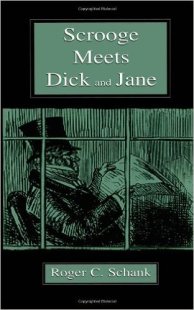
Roger Schank’s hilarious send-up of Charles Dickens’ A Christmas Story has all manner of respect for Dickens and even for the original Scrooge. In fact, Schank dedicates the book to Dickens.

51g54pbkdql-_sx310_bo1204203200_It is the practitioners of education-as-preparation-for-test-taking who absorb the blows of the author’s satire. The Yale University Admissions Department and the Educational Testing Service stand in for the broader industry.

Schank’s Scrooge, the businessman behind the Scrooge Testing Service, is forced to reckon with four nocturnal spirits. First comes the Ghost of John Dewey to illuminate the aged educational tester about the ordeal he must bear, then the Spirit of Education Past, the Spirit of Education Present, and the Spirit of Education Future. In real life one of America’s educational icons, Dewey had been Scrooge’s teacher at Columbia and had once lived in Scrooge’s apartment. But that was a long time ago and so very much forgotten.

I found myself chuckling throughout my reading at the turns Schank executes on his Dickensian framework. Satire achieves its success when it makes the status quo seem ludicrous. In this sense, Scrooge Meets Dick and Jane achieves its goal.

Satire becomes fun when it smartly juxtaposes an old and familiar reality with the new thing that is being ridiculed.

Dickens’ Scrooge awakens from his troubled sleep to throw open a window and announce by word and deed to the world below that he gone from being a curse upon it to a blessing. Schank’s Scrooge follows in stride. Let the remaking of a familiar scene stand in for the whole enterprise:

‘What’s happening today?’, cried Scrooge, calling downward to a boy, who perhaps had loitered in to look about him.

‘Eh?’ returned the boy, with all his might of wonder.

‘What’s today, my fine fellow?’ said Scrooge.

‘Today?’ replied the boy. ‘Why today is the day when the SATs are administered.’

‘I haven’t missed it.’ said Scrooge to himself. ‘The Spirits have done it all in one night. They can do anything they like. Of course they can. Of course they can. Hallo, my fine fellow!’

‘Hallo!’ returned the boy.

‘Run to the school and tell them not to administer the exam,’ Scrooge replied.

‘What? Why would they listen to me? No one could stop the exam. Besides the exam is being given all over the country in every school,’ replied the lad.

‘An intelligent boy!’ said Scrooge. ‘A remarkable boy! You are absolutely correct! I must call the newspapers. I must post something on our web site. I must get on television!’

‘What will you tell them?’ returned the boy.

‘That there will be no more exams. Scrooge’s Testing Service is going out of business,’ said Scrooge. ‘It will be a pleasure to talk to them. Yes, my buck.’

‘But they will demand a replacement,’ replied the boy. ‘How will they know how I am doing in school? How will they know who is getting it and who is not?’

‘They will have to do what they did before there were testing services,’ said Scrooge. ‘They will have to pay attention to each individual child. Yale will have to interview its applicants and listen to the opinions of teachers. They will have to seek out original minds instead of good test takers!’

‘Surely you jest!’ exclaimed the boy.

It is principally educators who will pick up Scrooge Meets Dick and Jane. No matter their educational philosophy, they will find something of themselves in Roger Schank’s satire. It may even enliven discussion which all to often is dry, arcane, and a country mile from anything as imaginative as Charles Dickens and that other Scrooge story.

Back on October 29, dear friends Maureen and Timmy Laniak sent me a link to a talk that the New York Times columnist David Brooks did at the 2013 Aspen Ideas Festival. Today, December 31st, I’ve finally made the space to watch and listen.david-brooks

Titled The Inverse Logic of Life, Brooks’ relaxed reflection on humility and character leave me breathless.

In fact, this talk has me unexpectedly leaning into 2017 with hope, expectation, and resolve.

You know how sometimes the cry of your heart is echoed by someone’s articulation of reality in a way you could never have done? That’s what Brooks’ talk does for me.

If you only have have fifty-five minutes and fifty seconds for one thing in 2017, start here.


Phyllis White Rodriguez-Peralta’s lovingly told survey of three legendary conductors of one of the great American orchestras is lovingly told. Her joy at having been ‘part of’ the story is palpable, even if her writing is a bit wooden and the volume occasionally flirts with hagiography.41hzvdj1v3l-_sx359_bo1204203200_

The author describes ‘the Philadelphia sound’ in this way:

Everyone has heard about the ‘Philadelphia sound’, a phrase that usually refers to the lushness of the strings and is associated particularly with Ormandy. This ‘sound’, however, really varies according to the conductor, the composer, and the venue. The seeds were sown by Stokowski, flowered with Ormandy, were strictly cultivated by Muti, and flowered again, but with more definition, under Sawallisch. Eschenbach’s influence (White Rodriguez-Peralta published this work in 2006) is just beginning.

This paragraph is pregnant of the author’s telling, particularly the hint that Muti represents something of a hiatus in the orchestra’s tradition.

It is astonishing that the Orchestra was led by only six principal conductors for the duration of the twentieth century. This idiosyncratic longevity on the podium creates a context for partisans of this or another version of ‘the sound’ who hold and express their views with a certain ferocity.

For this quite amateur appreciator of classical music, I find the principal value of Philadelphia Maestros to lie in the peek it affords us behind the curtain and into the complex constellation of musical gifts and personalities that constitute the source of a great orchestra’s music across the longue durée of its tradition.

Tradition, it seems to me, is the right word, and a venerable one at that. A conductor comes to a place like Philadelphia as a custodian or a steward of this tradition. His (or her) license to reshape what has been given by the preceding decades is finite. The author helps us to understand how a conductor’s individuality vis-à-vis ‘the Philadelphia’s’ tradition played out during the reigns of Ormandy, Muti, and Sawallisch.

Some glimpses are riveting:

Always very strict, Muti was particularly adamant about sticking to the composer’s text, and sometimes a singer reacted against his removal of an expected high note or expected trills and ornamentation because they were not in the original score. He once told Pavarotti, ‘Either sing what Bellini wrote or find yourself a new conductor’.

Or this:

The enmity between Abaddo and Muti was well known, although its origin has never been disclosed by either one. Perhaps it has something to do with the subtle prejudices between northern and southern Italy.

Or again:

In the following September, at the official welcoming ceremony for Sawallisch and his wife, Mechthild, he said to the festive crowd, ‘We are Philadelphians.’ Obviously recalling President Kennedy’s words in Berlin, he seemed, also, to be offering assurance that he would devote his primary efforts and attention to the Philadelphia Orchestra.

White Rodriguez-Peralta’s most effusive admiration is indeed directed towards Wolfgang Sawallisch, who died in 2013, seven years after this book’s publication. This book of light reading on the Orchestra’s directors shines a light on how iconic such a role becomes. Musical mastery is only a precursor to the effective work of the great conductor.

The author’s service lies in helping us to appreciate that fact as we listen to and, just occasionally, gasp at the beauty of that sound.

David Lee’s much-used Medellín Living blog is now complemented by this serviceable guide to an up-and-coming city.

519ihwqp2rlThe Medellín Travel Guide‘s strength is that its author has followed the people of the city he surveys in putting Medellín’s regrettable notoriety firmly in his rear view mirror. Though Lee references the bad old days when the city writhed under the rule of its drug lords—and even places the Pablo Escobar Tour first on his list of ‘Top Nine Things to Do’—he clearly loves Medellín as it is today. His enthusiasm is catching.

This travel guide leans heavily in the direction of the single male traveler but is by no means a ‘lecher’s guide’ to one of Latin America’s most exciting cities.

When the author has told us all he knows about Colombia’s second city—or, more likely, all he thinks we can profitably absorb—he finishes with a chapter called ‘Beyond Antioquia: Three Must-See Places in Colombia’. Which is to say, Medellín is a great place to begin to explore Colombia. There’s much more out there.

Lee’s reliable little book has made it easier for us to find our way there.

The scent of impossibility lingers about YHWH’s most improbable achievements until the moment that they have become real in space and time, have become history, have become redemptive fact on the ground.

The prophetic book of Zechariah aligns with its larger cousin Isaiah in anticipating YHWH’s rescue of long-exiled Judah and his return of his bereft sons and daughters to the land that they believed to have slipped their grip forever.

Zechariah and Isaiah also envision the leveling of the insurmountable topography that—metaphorically speaking—stands between exile in Babylon and anything worthy of the label ‘Return’. Yet Zechariah goes beyond the familiar declaration that steep climbs and dark descents shall become for these home-bound travelers a level path. He allows himself to taunt the ‘great mountain’ that lies between exile and promise, between loss and recovery, between the death of a dream and its realization.

Narrating his encounter with an angelic messenger, the prophet writes:

Then he said to me, ‘This is the word of the Lord to Zerubbabel: “Not by might, nor by power, but by my Spirit, says the Lord of hosts. Who are you, O great mountain? Before Zerubbabel you shall become a plain. And he shall bring forward the top stone amid shouts of ‘Grace, grace to it!’.”‘ (Zechariah 4:6–7 ESV)

Zerubbabel numbers among a select group of Judahite leaders who will find themselves the human agents of YHWH’s stubborn determination to look again upon his bereft Jerusalem and show her consoling mercies. His must have seemed a daunting task, indeed an impossibility shot through with potential for both catastrophe and shame.

Thus the angel’s encouragement, now become a prophet’s message.

The first part of this ‘word of the Lord to Zerubbabel’ is often quoted, and for good reason. The rhetorical taunt of the great mountain that follows is not.

Yet it manifests exquisitely the emerging confidence of a prophet that this thing shall be. That it has become YHWH’s purpose and therefore shall go forward, shall stand, unstoppable.

This confidence must have strengthened Zerubbabel-lian weak knees.

Who are you, O great mountain? You shall become a plain.

Indeed, the cry reverberates still, and strengthens the weak knees of us who know almost nothing of this strange-named Zerubbabel.

Before impossibilities, great mountains loom. But who are you, O great mountain?

When what was impossible has just now become a fact that we will tell to our grandchildren, we learn—slowly, if surely—to whisper to ourselves yet another word with Zecharian pedigree: ‘Grace, grace to it!’

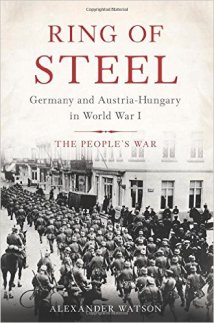
515u1nfwt0l-_sx328_bo1204203200_Alexander Watson’s 2014 tome massively documents the rope’s tightening around the neck of Germany and the Austro-Hungarian Empires during the 1914-1918 war. It makes the abstraction we call ‘encirclement’ personal, horribly so for the peoples dragged into a conflicted they alternately longed for and loathed.

Watson is explicit about his purpose:

This book’s central argument is that popular consent was indispensable in fighting the twentieth century’s first ‘total war’. It recounts how the German and Austro-Hungarian peoples supported, tolerated, or submitted to the conflict, and how participation changed them and their societies. Three themes run through the pages of this book. First, it explores how consent for war was won and maintained in Austria-Hungary and Germany … Second, the book explains how extreme and escalating violence during 1914-18 radicalized German and Austro-Hungarian war aims and actions, and it explores the consequences of this radicalization for those societies and their war efforts … The book’s third theme is the tragic societal fragmentation caused by the first World War, a break-up with not only preceded and precipitated political collapse, but persisted even after state order had been resurrected in central Europe … A dark future awaited central Europe.

If these words suggest a dispassionate analysis, the word ‘collapse’ give the lie to such an impression. In fact, Watson’s narrative is relentlessly tragic (another word that occurs above), pressing home the heart-rending personal cost of the war and its pursuit past the point when the Central Powers had any home of salvaging a face-saving peace.

The second subtitle of Watson’s book (The People’s War) pointed to what it would become, not how it began. The Great War’s genesis took place in a tightly held euphoria among small ruling elites. The interlocking alliances that held Europe together assured that if Austria-Hungary lurched into war, driven by ‘weakness, fear, and even despair’ rather than naked aggression, the rest of Europe was bound to be dragged along. It was of course the assassination of the heir to the Hapsburg throne by a Serbian nationalist that touched off this bonfire waiting to happen.

A strength of Watson’s narrative lies in his tenacious attention to the complex situation of the Empire’s ethnic groups. They were loyal to Empire and Emperor to a point. But the war’s depravations and duration were to stretch those affinities to the breaking point and well beyond. Encirclement was the outcome to be avoided from the start. The sudden retaliation of the Hapsburg Empire and their ‘good ally’ the Germans against the Serbs just as the Triple Entente (the understanding that linked the fates of Russia, France, and the United Kingdom) was hardening provoked the calamity with which none of the parties could have reckoned.

Ring of Steel narrates the horror of the ensuing years as it was experienced by Germany and Austria-Hungary inside the eventually narrowing ring. The war of the elites became the people’s war until those people could bear no more and either abdicated the burden that was pressed upon them by their rulers, collapsed under its weight, or were enslaved by the eventual manacles of Versailles. The entire political landscape of central Europe would be altered in revolutionary degrees.

This reviewer—manifestly not a professional historian—found Watson particularly helpful in his description of:

  • The Russian Revolution’s impact on the peoples of the Central Powers, not only by removing Russia from the battlefield but also by way of the receptive ears that Bolshevik ideas found among the war-weary peoples of two dying empires.
  • The inability of the leaders Hapsburg and German leadership to face the impending reality of defeat and take the appropriate measures.
  • The degree to which the political elites of the Central Powers dragged their people into an existential, ‘people’s war, and the astonishing persistence of ‘the people’ in supporting the war until their will was turned by the profound suffering it brought them.

A case could be made that this book is best approached via one of the more conventional treatments of The Great War. But, by all means, make that approach if it matters how ‘war is hell’ pertains also to one’s vanquished enemy.

As the son of a Northwoods mother, I was drawn to this book as one part of my family’s reengagement with this marvelous corner of America.61vdhu3rnnl

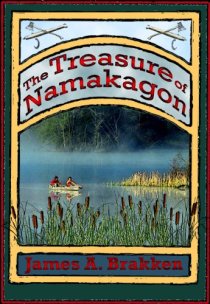
James Brakken serves up a delightful tale of the villains and the honest men and women who logged the region in the 1880s, sadly virtually leveling it in the process. It was (and is) a cold place where big hearts and stout arms were necessary to survival. Loggers, shopkeepers, prostitutes, churchmen, hunters and fishermen of both Scandinavian descent and Ojibwe ethnicity collaborated (or failed to) in circumstances where the careless felling of a pine or a particularly bad snow could turn matters to life-and-death-in the blink of an eye.

The Treasure of Namakagon has the feel, in this reader’s hand, of a labor of love. Simply and appreciatively told. Spare and honest, like a reliable Northwoodsman.

Clinton Arnold wrote 3 Crucial Questions About Spiritual Warfare two decades ago. Yet it remains the single best written resource on the topic to place into the hands of Christian believers.

Arnold cuts through both overheated rhetoric about ‘spiritual warfare’ and entrenched refusal to contemplate that reality by bearing down on just three questions:

√ What is Spiritual Warfare?

√ Can a Christian be Demon-Possessed?

√ Are We Called to Engage Territorial Spirits?513qhwb-vul-_sx322_bo1204203200_
In the process he brings to bear careful exegetical consideration, attention to how the early Christian church engaged similar issues, and a pastoral concern honed by the author’s own experience in cultural contexts where demonic activity seems less alien than in the West. The result is superb.

Working from first principles, Arnold demonstrates how Jesus engaged the reality of conflict as the normal condition of human life in this age. Consequently, spiritual warfare is not principally a specialized ministry but rather the circumstance and the responsibility of every believer. Yet the well-informed Christian will understand that the conflict is an uneven match. God’s sovereignty over his world is not threatened by the reality of Satanic blowback. Satan’s reign is conditioned both territorially and temporally. In the light of Jesus’ vanquishing of Satan’s power, the latter’s reign will eventually end here and end altogether.

So spiritual warfare is a given in the life of Christian individuals and communities. Why, then, the resistance to the language and the substance of such conflict?

Arnold deals patiently and fairly with ‘6 common objectives to emphasizing spiritual warfare today’. Since the 1970s, the English-speaking world has become awash with bizarre claims about ministries that do—at the risk of considerable understatement—‘emphasize’ spiritual warfare. Too often, the most high-profile among them are personality-driven and theologically impoverished.

The author is adept at re-shaping a biblically informed model for spiritual warfare for those who believe that truth matters enough—even amid the urgencies of wartime—to linger long in the understanding and embrace of it.

The New Testament (special attention is given to the Apostle Paul’s instruction in the letter to the Ephesians) teaches that Christians are assaulted not by one enemy, but rather by three: the world (the ways of the world), the devil (the ruler of the king of the air, the spirit who is now at work in those who are disobedient), and the flesh (the cravings of our sinful nature).

Together, this triad of unequal adversaries present the Christian with a complex rather than a simple conflict. As we engage it individually and in community, we discover that ‘spiritual warfare is a way of characterizing our common struggle as Christians’. Because parasitic re-positioning of actual truth is one source of defeat, Arnold pays particular attention to ‘common christological heresies’ on his way to a sane fleshing-out of how individuals and small groups of Christian might do battle with their real rather than their imagined adversaries.

At this point in Arnold’s book (as in this early stage of this short review), the reader could be forgiven for imagining that Arnold had metaphorized spiritual warfare down to its vanishing point in run-of-the-mill Christian ethical formation. This is certainly not the case, as his response to the second of three crucial questions will show.

As he engages the second crucial question (‘Can a Christian be Demon-Possessed?’), the trajectory of Clinton’s argument reaches its most valuable point.

When faced with the New Testament’s plethora of demon-encounter narratives and exhortations, the thoughtful Christian usually takes one of three paths:

√ S/he dismisses the stories about demons altogether.

√ S/he reinterprets the stories about demons.

√ S/he accepts the stories as what really happened.

Arnold chooses neither of these three paths and attempts to lead his reader through a more subtle consideration and towards a more faithful response.

A cautious survey of the language common to the discussion ensues. English Bible translations and, therefore, English-language discussion of biblical texts inexplicably settles into the language of ‘possession’ or ‘ownership’. In consequence, the question becomes whether a Christian can be owned or possessed by a demon. Many Christians will state that this absolutely cannot take place, given the reality of God’s redemption and therefore ownership of the Christian.

Arnold allows that ‘I wholeheartedly agree with this conclusion. A Christian cannot be owned and controlled by a demon.’

However, this is not to speak the language of the biblical texts, which usually employs the more flexible term daimonizomai (δαιμονίζομαι). This word can be understood to mean ‘tormented’, ‘vexed’, or ‘troubled’ by a demon. After engaging the pertinent texts and a number of examples from history, Arnold re-frames the question thus: ‘Can Christians come under a high degree of influence by a demonic spirit?’ … ‘Is it possible for Christians to yield control of their bodies to a demonic spirit in the same way that they yield to the power of sin?’

To such questions—which no longer joust with the more absolute concept of demonic possession—Arnold gives his ‘yes’.

This conclusion is followed by pastoral examples of how a believer can find himself in such troubled straits, with practical counsel on how to deal with demons, and with instruction on extremes that are to be avoided.

From the in-principle considerations of his first two ‘crucial questions’, Arnold then moves on to the contemporary issue raised by tactics that purport to engage ‘territorial spirits’. Though his introduction expresses appreciation for one of the leading advocates of the movement, Arnold is critical of one of its premises.

He endorses the notion that territorial spirits, as generally understood exist.

Nevertheless, ‘In spite of the widespread consciousness of the people of God throughout history of the existence of high-ranking hostile angels, we do not find them naming the powers, rebuking them, binding them, or trying to cast them out of a region.’

For reasons based in the biblical record and the testimony of the early church, the author is dubious that the tactics of ‘Strategic Level Spiritual Warfare’ have the theological and historical pedigree that they claim.  However, Arnold credits its practitioners’ concern for the lost and suggests alternative ways of ministering to a city that do not involve human beings ‘taking authority over’ the purported demonic lords of a region or a city.

By wearing his scholarship lightly, Clinton Arnold has produced a carefully reasoned, popularly (or semi-popularly) accessible manual to a matter that is intrinsic to the very idea of the Christian life in a contested world. At the same time, he has provided a meeting space for people of good will who will gather thoughtfully around a matter that has provided inexhaustibly divisive among contemporary churches.

Two decades on, 3 Crucial Questions About Spiritual Warfare is still the place for English-language readers to begin.