Feeds:
Posts
Comments

Andrew Davis has written a splendid little manual to large-scale memorization of Scripture that is not for the faint of heart but will develop in the adventurous practitioner a strong heart.

51rqavqfyrlDavis attends to both the why and the how of memorizing entire chapters and books of the Bible. He distinguishes between meditation and memorization, but finds it difficult to accomplish the former without investing in the latter. I think he’s right on this point, particularly as he notes an author’s logical flow that is perceptible and eventually absorb-able when the object of one’s memorization is a the wide Scriptural landscape rather than a short stopping-point here or there.

Davis’ method (the term seems preferable to ‘technique’) provides tracks for what will inevitably represent for the memorizer a long and even stubborn obedience in the same direction. He minces no words about the challenge of large-scale Scripture memorization, but encourages the readers that accomplishing this feat is more a matter of blood, sweat, and tears than of natural mental endowment.

I derive the title of this very brief review from one of Davis’ methodological steps. He calls it ‘weeding the garden’, which is the step he endorses that will allow the memorizer to return to what he or she has committed to memory and weed out the small errors (‘weeds’) that will creep in.

This book (99¢ in Amazon Kindle format as I write this review) meets a bona fide need, is clearly a labor of love, and will without doubt move would-be memorizers past the various early-stage obstacles in this journey and on to the place where many words of the Word have been securely placed in the storehouse of the heart.

This is one magnificent little solution to broken zipper pulls.

81hbdskzd6l-_sl1500_I travel a lot and my suitcases wear out. The first thing to go is usually a broken zipper pull. For some reason, it never occurred to me that this is a reparable situation (I’m slow …), so I endure years of wearing my fingers raw by reaching inside and manually moving the now pull-less zipper. I guess I just tend to categorize it as an occupation hazard that you live with, like a cold sore or a low emotional IQ.

But no more. You get ten of those very solid zipper pulls for less than ten bucks. They’re solidly built and a zip (pardon the pun) to install.

I’m sold. Fingers of the world, rejoice.

In short order Yohanna Katanacho has established himself as a thoughtful and reliable member of an extraordinary cluster of theologians who gather around Bethlehem Bible College. In The Land of Christ. A Palestinian Cry, Katanacho allows us a glimpse into the remarkable events in his own life that have made love towards all, even towards one’s enemy, his core alignment. One might even say that Katanacho’s personal narrative, which occupies the first part of the book and helpfully frames his subsequent argument about the land, drains the word ‘enemy’ of its acid. In the context from which the author writes, this is no small accomplishment and should not be confused with passivity in the face of the cruelest of facts.51dfnjnbhml-_sx331_bo1204203200_
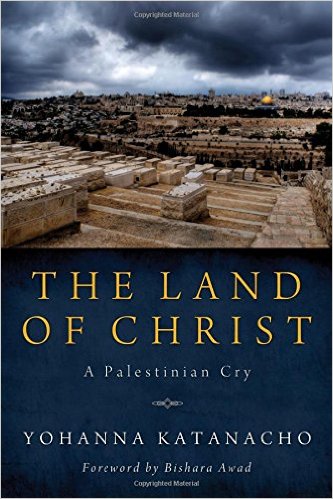
Katanacho proposes ‘Three Important Questions’:

√ What are the borders of the land?
√ Who is Israel?
√ How did God give Israel the land?

Exploring a wide range of biblical passages that are often adduced to establish the modern state of Israel’s divine right to the contested space it claims, the author argues that there is a fluidity in biblical definition both of the land and of Israel. Additionally, there is a contingency in the giving of the land that makes its possession subordinate to a God-given purpose and to the ethic with which it is held. Finally, the author asserts that New Testament revelation considerably reframes the question of the land in ways that make naive citation of Old Testament texts by Christians problematic.

To his credit, Katanacho never ceases writing as a Palestinian Christian believer. The reader who will be most persuaded by his argument is the English-speaking Christian who has imagined that his or her theology provides clear and simple affirmation of the contemporary status quo. Katanacho asks this reader both to think again and to think in the light of a reasoned Christian theology of the land.

Additionally, Katanacho moves beyond the language of victimization, a courageous act in his context. Even as he writes assertively against what he can only recognize as ‘Israeli occupation’ of land that prior to 1967 belonged to others, he recognizes that all—Palestinians, Jewish Israelis, Muslims, Christians—are complicit in a situation that makes imposition and violence the default behaviors in this contested arena. Love supplants this hateful status quo usually or even only as it flows from encounter with the cross of Christ. Importantly, Katanacho does not believe a solution to the current impasse over the land’s possession will occur soon, probably not in his lifetime. Yet he holds on to the hope that it will come eventually, and he writes this work as a ‘Palestinian cry’ for disciplined, non-violent, and loving conduct (even when this conduct is ‘resistance’) in the meantime.

As is common to circles of theologians who lack the luxury of doing theology at a distance from painful and pressing realities, Katanacho is attentive to how ‘having the right theology’ changes hearts, minds, and facts on the ground. An extended quote is in order, not least for its exquisite distinction between ‘eschatacentric’ and ‘Christocentric’ eschatologies.

(H)aving the right theology transforms our psychology. The term ‘theology’ is not only associated with orthodoxy (right doctrine) and orthopraxis (right practice) but also with orthopathos. Orthopathos is the kind of human suffering that becomes a source for liberation and social transformation. In his suffering, the Psalmist thought that God had forgotten him (Ps 42:9) and even rejected him (Ps 43:2). But in fact, his ordeal make him thirst for God and promoted him to pour himself into prayer … This leads us to the second insight: having the right theology, or more specifically the proper view of God, alters the focus of our eschatology. God speaks in and through our pain. In effect, he is transforming the pain of Palestinian refugees into a divine message that reminds the world of the difference between heartless or hardhearted eschatacentric eschatology represented by some Christian theologies and merciful Christocentric eschatology. The former focuses on ‘God’s agenda’ or the so called prophetic programs, while the latter reveals God’s heart and nature.

The final chapter includes the author’s lightly retouched version of ‘The Palestinian Kairos Document’, a Christian manifesto that is worth the price of this book.

This reviewer suggests reading The Land of Christ alongside Colin Chapman’s Whose Promised Land?.
I’ve been through a few replacement sets of objective lens covers and have come to the conclusion that the thin strip between the round piece the anchors to the binoculars and the actual lens cover will always eventually break. Simply plan to replace your lens covers when it does.

41n81yducflOddly, this item has become difficult to find online. I was happy to discover this Opticron product. As other reviewers have noted, it’s important to measure the external diameter of your objective lens carefully before ordering. Otherwise, your lens cover will be too small to fit or too large to stay put.

This is not a high-tech or glamour product. It simply works, and is readily available in multiple sizes. That’s enough for me.

This is a good map of Costa Rica, though it promises a bit more than it can deliver.

The familiar blue-and-gold ‘National Geographic look’ come across attractively and clearly. The map details are, as expected, Spanish-language designations: for example, ‘Parque Nacional’ rather than ‘National Park’ and ‘Provincia’ rather than ‘Province’. Some of the ‘marginal’ text is either in English or in both Spanish and English. National Parks are highlighted helpfully and some ‘adventurous’ activities are signaled by an icon at the appropriate location. For example, a stylized surfer icon marks beaches where surfing is especially promising.

51-gsp0ymql-_sx228_bo1204203200_If that’s what you expect from an ‘aventure travel’ map, you’ll be pleased. If you expect more than this, then maybe not so much.
The level of detail is good for a map of a country that is roughly the size of the American state of West Virginia, splashed across the two sides of the map and labeled as ‘East’ and ‘West’. Elevation lines give an adequate sense for the topography of this largely mountainous country.

The paper is solid stock and at the same time flexible enough for quick unfolding and refolding. I find this characteristic better than the vast majority of maps of the region that I’ve seen. Yet National Geographic insists on claiming that the map is ‘waterproof’, which seems quite a stretch. If you attempt to stand under an umbrella and read this map during one of Costa Rica’s ‘aguaceros’ (= downpours), your ‘waterproof’ map will be toast. Thus, my claim about over-promising and under-delivering on what is otherwise a perfectly fine product.

The Costa Rican road system is constantly upgrading and degrading and the rhythm of this is difficult to predict, let alone to record on a paper map. Some reviewers have faulted this map for being out of date on that front. The non-local traveler in Costa Rica would be well advised never to count on a paper map for knowing whether this or that bridge was out, or this highway paved or unpaved. Costa Rica is simply not the place for a paper map to stay up to speed on such things, and this is not the fault of the product under review. Having said this, I find the map relatively reliable for road travel planning.

All in all, I like this map a lot. It fills a gap for getting the big picture of where I’m about to travel or where I’ve just driven in this inexhaustibly beautiful country, which deserves and repays scrutiny. I’ll just smile a bit at the ‘adventure travel’ and ‘waterproof’ marketing.

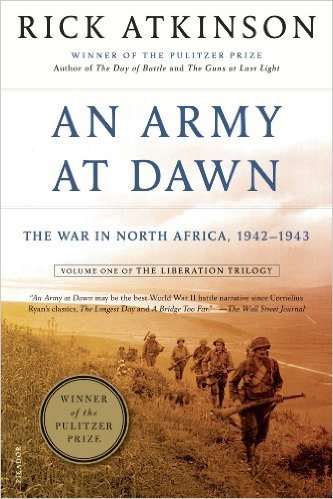
If from our increasingly remote distance, anything about the Allied victory in World War II looks inevitable, read Rick Atkinson’s compelling history of the 1942-43 North Africa Campaign and be disabused of that fiction.518XZOezryL._SX331_BO1,204,203,200_.jpg

In prose that easily absorbs the non-specialist reader (as this reviewer is), Atkinson shows what a paltry and untested force America was able to field alongside of a decidedly unsung British deployment in what became what must have seemed like it would never be: a defeat of a strong German force within convenient range of the German homeland.

Before this could happen, the green American forces needed to lose their triumphalism and their British allies needed to learn how to fight to a win on an inhospitable battlefield that was complicated by both weather and colonial legacies. Many American readers (again, I am one) will be surprised by the complex French role at this early stage of the war, a story I will not spoil for potential readers in this short review.

Among military historians, it seems, two temptations are to be avoided. The first is to chronicle a conflict as though the evolving technology of weaponry were the main thing. The second is to paint the war in terms exclusively of the ideas and decisions of generals. Atkinson has become a great writer of military history in our time because he brings mastery of both of these elements to the more interesting story of the soldier whose prospects for life and death were shaped by those less personal forces.

Although Atkinson is serially quotable, the first paragraph of the book’s prologue captures his touch for the human drama of war and its cost:

Twenty-seven acres of headstones fill the American military cemetery at Carthage, Tunisia. There are no obelisks, no tombs, no ostentatious monuments, just 2,841 bone-white marble markers, two feet high and arrayed in ranks as straight as gunshots. Only the chiseled names and dates of death suggest singularity. Four sets of brothers lie side by side. Some 240 stones are inscribed with thirteen of the saddest words in our language: ‘Here rests in honored glory a comrade in arms known but to God.’ A long limestone wall contains the names of another 3,724 men still missing, and a benediction: ‘Into Thy hands, O Lord.’

The toll was emblematic of a principle point of Atkinson’s book: America only really began to act like a world power on North Africa’s regrettable battleground. This stepping into a space that history had prepared for her marks, in retrospect, the turning point of this vast, global conflict. Churchill’s eulogy for the campaign proved right: The victory that awaited at the end of it was in fact ‘the end of the beginning’.

The genius of Atkinson’s An Army at Dawn lies, in part, in the author’s ability to help the reader understand why this was so while never losing sight of the boy from Iowa crouched in terror as the seemingly invincible Wehrmacht threw its best at him and his buddies, then eventually collapsed in ignominy as claims of invincibility came in for severest re-negotiation so very far from home.

This book is one part exhortation and … well, just one part exhortation.51uhfjqgjkl

The editing is abysmal and the content idiosyncratic and unhelpful.

I cannot doubt the author’s good intentions.

Steve Maslar’s Small Stream Trout Fishing is a very basic primer for the trout fisherman who might think the true sport is only to be had in the larger rivers with the big names.

Not so. Fly fishing can also be a huge and worthy challenge in the smallest of waters.

61py1r34wil will get you thinking along those lines. Then you’ll need practice or another book.
This is 101, basic stuff.

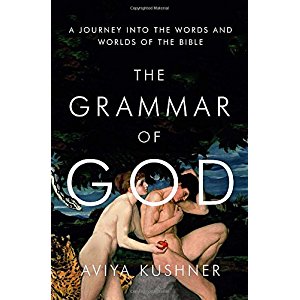
Don’t let Aviya Kushner fool you.

This not a book about grammar or words, though there is plenty of succulent discussion of both in this remarkable offering from a young Jewish writer and teacher.

51iasfxem5l-_ss300_It is principally a sustained reflection upon memory and how to remember well.

Kushner writes from a tradition that treasures remembering as the last bulwark against disaster. She is a master chronicler of the memory craft, passed on to her by parents who did not grow weary of arguing about words, the tradents of memory, the traditioners of a people, the access to a God who for all of us uncanny evasiveness both speaks and is spoken about.

From the idiosyncratic and unpromising project of laying biblical translations beside each other in coffee shops in Iowa, New York, and Tel Aviv, Kushner spins a tale of the richness of words, the promise and portent of language that yields its treasures only to those who linger long with it, and her undying affection for a family that taught her to love words before it she made her way to … well … to Iowa.

The author treats us to reflections on:

√ Love
√ Laughter
√ Man
√ God
√ Law
√ Song
√ Memory
√ How It (Never) Ends

Her ruminations are rooted in the Bible (Hebrew and English), in the commentary of rabbis (early and medieval), and in the dinner-time rows of a family that argued as it ate. About words. About God. About matters both penetrable (if you harry them hard enough) and eternally impenetrable.

The truly frightening thing about Aviya Kushner’s The Grammar of God is that it appears to be the proverbial first book from the pen of this gifted writer.

After a beginning this good, what might she get up to next?

Even as I write that this massive compendium is ‘the go-to course for the non-financiaI-professional non-profit leader’, I worry that I am damning Financial Management for Nonprofit Organizations by faint praise.41oktly896l-_sx345_bo1204203200_

There is a strong argument that this is work around which non-financial-professionals and financial professionals in any non-profit ought to rally, to derive their shared understanding and dialect, and to establish common a financial platform for organization-wide strategic planning.

John Zietlow has been a persistent and influential voice in favor of nonprofit planning that abandons a debilitating ‘break-even’ philosophy and aims to build a tactical and strategic reserve. That understanding of a viable future for nonprofits its baked into this encyclopedic manual for nonprofit financial management.

I don’t think there is another resources that competes with this text.

Highly recommend by this veteran of the nonprofit wars.