Feeds:
Posts
Comments

Robert E. Jone’s frequent and almost thematic mention of the storied division’s ‘rendezvous with destiny’ combines with his subtitle (‘The first fifty years’) to suggest that he believes he and his co-authors have written the preface to continued achievements by the Screaming Eagles. The six years that have passed since this book’s 2010 publication debate suggest that his intuition was more than merely loyalty to a storied military unit.

51eekqir52lIn the book’s eloquent preface, Major General Francis L. Samson (Chaplain, USA, Ret.) writes that ‘Sherman was not quite right when he said “War is hell,” for in hell there is no compassion, no love, no generosity, no empathy for the suffering. I believe most firmly that the American serviceman (and service woman) in combat exemplifies more than any segment of our society the virtues of love, of self sacrifice, of courage and of fortitude in the face of danger and death”.

It is this story of non-hell at the gates of hell itself that Jones and others weave competently in four chapters that correspond to the 101st’s birth as the storming of Fortress Europe was on planners’ desks through to the development of the concept of Air Assault and its deployment in Desert Shield and Desert Storm. A fifth chapter presents the formal citations of Screaming Eagles who were awarded (sadly, many posthumously) the Medal of Honor.

The book’s reader will be best placed to absorb the often riveting history of the Scream Eagles if he or she has at least a modest command of ‘U.S. Army dialect’, for Jones does not pause to explain or to collect stragglers. In his story, the 101st was often ‘in first’ when nearly impossible—or at least profoundly unfamiliar—military challenges faced the nation’s civilian masters. This is a tale of rising to the challenge, of finding oneself equal to them, then of returning to one’s barracks knowing that the full story will only rarely be fully known or appreciated.

The book’s style is uneven, perhaps owing to the reality of multiple contributors that is revealed only by small-font attribution at the beginning of each chapter and in the appreciation that constitutes the volume’s concluding pages. The first chapter, ‘World War II’, provides the volume’s finest narrative. It is striking to be reminded how late in the conflict the 101st was created and brought to bear upon Europe’s darkest moment. The epic conflict in the European Theatre is too easily read as an inevitable ‘fait accompli’, for the modern reader knows how it ended. But the men of the 101st, thrown in to experimental modes of warfare as the ‘first to try’, did not. Over and above the massive emphasis on training that Jones chronicles, the newly airborne infantry experimented and adapted and re-thought convention in real time as the politicians and the generals (who by many modern accounts were not the heroes of WWII) did their best to get to Berlin and end this thing.

If Jones’ treatment of WWII represents the book’s best writing, his chapter (the author is actually John L. Burford) on ‘The Training Years’ turns over the soil that is most peppered with surprises. The nation was still weary of war and—beneath the general terror regarding a thermo-nuclear exchange—averse to thinking much about the possibility of its renewal. Yet at the 101st’s Fort Campbell (Kentucky) and a network of collaborating bases, planning for a new kind of mobile warfare continued apace, concealed from civilian life more often by a veil of apathy than of any active attempt to remain hidden. The skies, mountains, and cow pastures of Kentucky and North Carolina played host to Screaming Eagles on planning maneuvers more often than anyone but the locals who sometimes gathered to cheer them on cared to know. Yet these exercises allowed the chiefs of a reconfigured U.S. Army a sense for the potent force that, should its promise be developed and eventually deployed, would allow the newest superpower to order a confusing world at least partially according to its whims.

‘Vietnam’ (Chapter Three, by Gary Linderer) makes for a sad read. Linderer’s take alludes to but strongly counter-argues the reigning mythology of an underperforming military fragging its officers, smoking its weed, and generally exporting America’s worst decadence to a country whose name has been unrecognizable ‘back home’ just a few years earlier. The style is that of an expanded series of after-action reports, in which purposeful movement of helicopter-borne troops wreaked general havoc on the Viet Cong (VC) and the North Vietnamese Army (NVA), with occasionally helpful support from its allies in the Army of the Republic of Vietnam (ARVN). Yet despite the detectable stiff upper lip and military deference to civilian authorities that pervade Linderer’s story, one senses the growing critical mass of political indecision that turned the 101st’s performance in Vietnam into one summarized by a tone of ‘We did what we were told and we did it well, but …’. The author of this chapter allows his feelings to be glimpsed when he notes, laconically, that it was difficult for the solider in the jungle to sustain morale and high performance when President Richard Nixon had so clearly decided to end the war. The notion of becoming the last casualty has limited appeal.

During the warn abbreviated as ‘Vietnam’, the nation was grotesquely divided as to its purpose (or the absence of one) in Southeast Asia. How could those at the point of the spear endure the dilemma that was thrust upon them. Yet they did endure and, if Linderer’s story is read for its face value, they left a mission that became dire with the pride that comes from having met one’s rendezvous with destiny gamely, professionally, and without leaving anyone necessarily behind.

The story of the first Gulf War (Desert Shield and Desert Storm) provides the book’s most tactically gripping (Chapter Four: Air Assault, by Thomas H. Taylor) entry. What looked on CNN like an unmitigated romp through the desert turns out to have been built upon the scaffolding of bold and intricate plans that produced a gripping run of cliff-hangers before Saddam Hussein’s goose could finally be pronounced cooked.

The final chapter (Chapter Five: Medal of Honor Recipients) sustains the declaration in the preface that war is not yet hell. But nor is war far from that dark and hopeless doorway. One reads with a heart heavy for fallen soldiers whose best-lived moments were, more often than not, their last.

The book is marred only by a curious frequency of misspellings.

As a matter of full disclosure, this reviewer should disclose that he has no military training or experience (in case this isn’t supremely evident already!) and that he is the admiring and prayerful father of two sons who currently serve as officers among the Screaming Eagles of the 101st Infantry Division (Air Assault). These men serve regularly in places whose names may serve as chapter titles for this book’s sequel.

Daniel, who wears lightly the burden of his imperial name Belteshazzar, inhabits a moment when a tyrant’s rage takes life without so much as a footnote.

Circumstances have placed the young Jewish exile in the most strategic of the pagan court’s hallways. He makes friends among the pagans, those friends face insufferable demands, needy friends reach out to Daniel. So does life roll in the space of this low-profile, precocious Jew, far from home but awake to his moment. Continue Reading »

defiance: Jeremiah 12

Among literatures ancient and modern, the Bible’s astounding realism is sui generis.

The biblical literature manages to defy all religious restraint in order to press into YHWH’s reality. It will settle for no less.

The prophet Jeremiah is remarkable, if otherwise unexceptional in this respect.

Righteous are you, O Lord, when I complain to you; yet I would plead my case before you. Why does the way of the wicked prosper? Why do all who are treacherous thrive? (Jeremiah 12:1 ESV)

He dares to ask, privately and then in an excruciating way, publicly: Why are things not as they ought to be? As they have been promised to be? As you, YHWH, have led us to believe that they will be? Continue Reading »

symmetry: Jeremiah 2

The design of life is shot through with extraordinary ironies. ‘Poetic justice’ is one tried and true expression that attempts to define this.

One of the odd symmetries of reality is that we become what we chase after. It is the logic in the deep structure of creation that generates what theologians eventually come to call ‘sanctification’ and ‘depravity’. A thousand saintly techniques crumble before one truth: when we pursue what is holy, we become more holy. The encyclopedia of sin and idolatry is equally predictable from this angle of view: we become tragically like the idols that we waste our lives pursuing.

It is an arrangement of twinned promise and threat. Yet none of it is theatrical or false. This is simply how things are.

Hear the word of the Lord, O house of Jacob, and all the clans of the house of Israel. Thus says the Lord: ‘What wrong did your fathers find in me that they went far from me, and went after worthlessness, and became worthless?’ (Jeremiah 2:4–5 ESV)

The Hebrew prophet plays here upon one of the Hebrew Bible’s most potent negatives: הבל,  ‘worthless’, ‘vanity’, utter moral weightlessness. It is a commonplace—though a pungent one—for the prophets to label all manner of glorious idols with this pejorative claim. But it is a deep insight into the dynamics of being human to recognize that we become what we treasure.

If an idol is inert, so do we lose the efficacy of will, the gigantic capacity to decide who we will become. If an idol is glitzy, so do we become flecked with cheap reflections that conceal the emptiness within. If an idol is elevated above its peers, so do we fall prey to the hubris of the unique and the special.

But if, the prophet would have us know—since despair is not his end game—, if we pursue the Ineffable, the Most High, the Holy One of Israel, we become better than we were. By grace and imitation, not by technique or exertion.

Things become simple.


identity crisis: Isaiah 54

Against all the protestations of shame, your past does not define you.

What you have been is not coterminous with who you are. Or will be.

This, at least, is YHWH’s promise to his despondent exiles in Babylon.

‘Sing, O barren one, who did not bear; break forth into singing and cry aloud, you who have not been in labor! For the children of the desolate one will be more than the children of her who is married,’ says the Lord. (Isaiah 54:1 ESV)

If there is a greater shame than childlessness in the Bible’s Old Testament, it is difficult to say what that should be. Perhaps only having borne children and lost them could compete with never having children at all, so deep does this feature of the cultural realia reach into the Bible’s sacred literature.

In the turn-tables book of Isaiah, YHWH is having none of it.

She who has not split the air with the shrieks of childbirth will find recompense in shouts of joy, late coming.

All of human experience argues that only what has been shall ever be. Again, YHWH is having none of this curiously persuasive logic. He is the Creator of new things, things unspoken, things unimagined, deepest longings too savage and powerful for words. He meets them, satisfies them, creates them, endorses them, then liberates his own to become them.

The Bible’s ‘religion’ is no tame creed.

It is wild, counterintuitive, impossible, then real. Life with YHWH knows no bounds save those that loving providence establishes.

As the barren woman restored in a moment to fecundity finds children streaming to her that she did not bear, so YHWH’s future comes in spades from angles never contemplated. Yet her children are hers, his gift, stomped down, compressed, overflowing.

She forgets to miss the biological progeny of her dashed dream, so occupied with this tumbling, laughing harvest of children unforeseen. They laugh noisily. Only her delight is louder.

A conversation with the Wheaton College Chinese Students Fellowship

16 September 2016

Now concerning food offered to idols: we know that “all of us possess knowledge.” This “knowledge” puffs up, but love builds up.If anyone imagines that he knows something, he does not yet know as he ought to know.But if anyone loves God, he is known by God. (1 Corinthians 8:1–3 ESV)

  • You must believe that knowledge is a good thing
  • You must understand that ‘knowledge’ that denigrates another person is not true ‘knowledge’. It is folly masquerading as knowledge.
  • You must acknowledge that the opportunity to dedicate a portion of your life to acquiring knowledge at Wheaton College is a precious and unusual gift.
  • You will carry around the ‘burden’ of knowing more in your area of expertise than most of the people with whom you’ll interact … as well as the ‘burden’ of an inquisitive spirit.
  • You should internalize the fact that knowledge is ‘merely on the way’ to deeper knowledge.
  • You will learn to translate your knowledge for the benefit of those who lack the vocabulary and the abstract concepts that have become natural to you.
  • You must embrace the fact that there are many kinds of intelligence: emotional, intuitive, abstract, concrete, etc. You must not exalt your own strength of knowing over others.
  • You will become more and more contextually aware.
  • You must recall that knowledge proceeds from love and thrives best when encased in love.


This exceptionally planned and executed visual introduction to the Colombia surpasses any other coffee-table book about a nation or region that I’ve seen.

51ebrfdjyzl-_sx362_bo1204203200_-2Its 333 pages and high-quality paper stock make it an admirably heavy work, a full five pounds in the lifting.

Best of all, its exquisitely photographed images communicate the beauty and stunningly regionalized diversity of this South American nation. The prose does not pander to the reader, but introduces him or her to just enough context to form a helpful setting to the photography, which dominates.

A well-written (in Spanish) ‘Prologue’ and ‘Presentation’ give way to a presentation of one of the signature characteristics of the country: ‘Territorio de Contrastes’ (A Territory of Contrasts). The rest of the work leads the reader across the major regions of this vast country: ‘Altiplano Cundiboyacense y Santanderes’, ‘Region Caribe’, ‘Antioquia y Región Cafeteria’, ‘Pacífico’, ‘Sur Andino’, ‘Alto Magdalena’, ‘Orinoquía’, and finally ‘Amazonía’. Continue Reading »

Stephen Kinzer’s rambling walk through the saga of modern Turkey will delight the ordinary reader with an interest in this ‘bridge nation’, while occasionally distressing the historian.

The dedication of this revised version (‘To the People of Turkey’) signals that Kinzer writes 51aed7hll-_sx331_bo1204203200_from the heart and with affection rather than from the discipline and precision one expects of the historian. This is not a criticism of Kinzer’s formidable work but rather an attempt to define its genre. Those who come to Kinzer’s writing—as this reviewer did—through his superb treatment of the Nicaraguan conflicts (The Blood of Brothers) will anticipate the bent of Kinzer’s method.
Kinzer, the erstwhile Istanbul Bureau Chief of the New York Times, does not hold back his own views and even prescriptions for the nation that has become his subject. The book’s earliest pages telegraph this. Published in 2008, the book’s introduction observes that ‘(A) new regime has emerged in Turkey that is likely to govern for years to come. This is good, because this regime draws its strength from the people’s will, but it is also disturbing.’ The first chapter’s opening line introduces us to a personal preference: ‘My favorite word in Turkish is istiklal.’ Continue Reading »

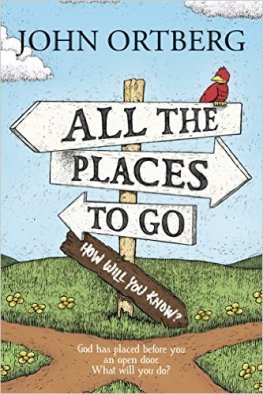
If John Ortberg’s books from the first quarter of the 21st century are still being read—as I suspect they will be—in the century’s second quarter, this achievement will no doubt turn on his remarkable capacity for interweaving careful and disciplined reflection on the biblical text with an uncanny accessibility to the popular reader. What may well distinguish Ortberg from similarly high-achieving peers is his hilariously self-deprecating humor.

51ipoeuikvl-_sx331_bo1204203200_Put simply, Ortberg is a very fine thinker and a remarkably intelligent writer.

Borrowing his title not from an obscure theologian but rather from Dr. Seuss, Ortberg in this work explores what one can make of an enduring mystery: the relationship of determinism to human freedom. Christians will make up the majority of his readers. Whether or not they realize it, Christian readers most frequently frame this same philosophical conundrum in terms of God’s sovereignty and free will.

Without falling needlessly into the facile and reductive traps, Ortberg navigates these waters with a particular eye not so much to the philosophical dilemma itself, but rather to what the Christian believer is to make of his or her life’s decisions in the context of this mystery. In this sense—though not in the cheaper sense with which the word is so often deployed these days—Ortberg has given us a profoundly practical book. Continue Reading »

Near the end of twelve impeccably written lectures delivered to Fuller Theological Seminary in 1964 and published in 1968 as The Inescapable Calling, R. Kenneth Strachan summarizes his work by asking this question: What good is the Christian in the world today?

Strachan’s life ended prematurely in 1965, so this book is in some way the valedictory of a respected mission statesman who had found credibility among both his Latin American and North American constituencies at a time when such an outcome was by no means guaranteed. Indeed, it was doubtful, so tense were the times. The Latin America Mission was taking its first innovative steps towards ‘turning everything over to the nationals’, a step that raised eyebrows among conventional thinkers, put at risk deep institutional legacy, and—in retrospect—defined the genius of the ‘LAM’. Continue Reading »