The prophets poke at the sanctimony that assumes material blessing is YHWH’s endorsement. To be rich is to be good, people too easily assume. Isaiah, among others of his peers, will have none of this moral non sequitur.
For you have rejected your people, the house of Jacob, because they are full of things from the east and of fortune-tellers like the Philistines, and they strike hands with the children of foreigners. Their land is filled with silver and gold, and there is no end to their treasures; their land is filled with horses, and there is no end to their chariots. Their land is filled with idols; they bow down to the work of their hands, to what their own fingers have made. (Isaiah 2:6–8 ESV)
The irony—with Isaiah, there is always irony—pivots upon the Hebrew verb מלא, ‘to be full’. The prophet peppers his denunciation of false religion with this verb as though there’s no tomorrow.
The first and the last of the italicized מלא-phrases point to the lazy amplitude of their religion. Their very piety is an act of wandering, their religiosity a rejection of the exclusive Israelite God who has named himself to be unlike all others. The middle two italicized phrases refer to their wealth.
They are not good, because rich. They are, at the same time, very bad and very rich.
Idolatry, for the prophets, is not open-mindedness, not sophistication, not the cologne of the worldly-wise. It is treason, rebellion, the spiritual equivalent of getting stupidly hot and horny with a neighbor’s hungry wife. There is nothing good in it.
It is possible to gild it with gold, to ornament it with silver. Yet it remains the pathway to a world of eventual hurt.
Riches, declares the text, are not God’s endorsement. Sometimes wealth is just wealth, the shiny trinkets of the doomed.
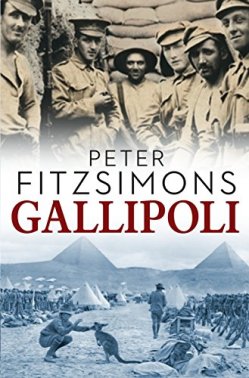 FitzSimons puts a lot of himself in this story, not always a promising approach for a history writer. Yet this manages to illuminate rather than obscure the Gallipoli narrative. The author’s full-disclosure explanation of how his own understanding of the battle has changed gives the non-Australian reader a glimpse into the various ways in which that antiopodean nation itself has moved through various stages of engagement with one of its defining moments.
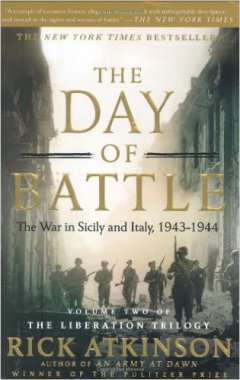 In The Day of Battle, as elsewhere, Atkinson’s writing is not only fueled by the very best research. It also goes down smoothly as such a tale can.
 My own battle with fundraising has seen some success and some notable failure. I was raised to believe that a decent person never asked anyone for money. Nouwen’s little book turns that idea upside down.
 In his introduction to The Coldest Winter, the author alludes to the ‘colossal gaffe’ of Secretary of State Dean Acheson’s omission of South Korea when drawing America’s Asian defense perimeter. Sadly, the Korean Conflict was to offer a strong roster of competitors for ‘greatest colossal gaffe’ status. Per Halberstam’s statistics, the chaotic war without the title would claim 33,000 American lives alongside of 415,000 South Koreans and perhaps a million and a half Chinese and North Koreans.
 The Rough Guide to Colombia is no exception. It may well be the best of its kind for Colombia. Why do I say this?
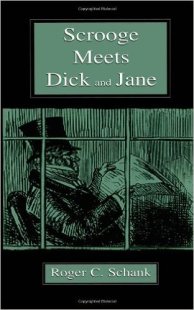 It is the practitioners of education-as-preparation-for-test-taking who absorb the blows of the author’s satire. The Yale University Admissions Department and the Educational Testing Service stand in for the broader industry.


 Canter Bridge