 As one of the evangelical movement’s most interesting and fruitful popularizers, Richard Mouw can almost be imagined rolling out of bed and dashing off an intriguing treatment of Isaiah’s sixtieth chapter, then placing it the next day in his readers’ hands. Such is the effervescent ease of his prose. Yet surely a book like this discloses instead years of reflection about what the Christian gospel has to say about God’s final purpose(s) with his world and how that ought to shape human conduct meanwhile.
As a signal of his (and this world’s) destination, Mouw writes early on that …
Isaiah 60 records a vision of a magnificent city. In it the prophet is speaking to the city, calling attention to various aspects of its appearance. His tone is joyful, his mood excited. This city is not like any other that he has seen among the products of human efforts at urbanization; it is a city built by God. Sometimes Isaiah addresses the city in the present tense; at other points he employs the language of future fulfillment. Though the city has not yet been established, he is certain that it will someday arrive. It is clearly a transformed city. Many of the people and objects from Isaiah’s own day appear within its walls, but they have assumed different roles, they perform new functions.
Transformation of what God has made and what has fallen from its intended purpose is a core feature of Mouw’s vision of history’s destiny. His argument broadens out beyond exposition of one chapter of an Old Testament book’s sixty-six to offer a richly traced counterproposal to skinny Christian views of human fulfillment as ‘dying and going to heaven’.
Mouw wants to know—as apparently did the Isaianic tradition—what will become of all of this, not just of me and of people who believe things like the ones I believe.
The result, in this reader’s assessment, is a stirring vision in which all nations bring their best stuff—their cultural, religious and existential product—to the perfecting of a city that is resplendent in both beauty and justice.
Mouw sees the walled but gates-flung-open city of Isaianic vision as something of a metaphor for this world when it has been duly refined, purged—again, transformed. It stands along more familiar descriptions of the same that travel under the title ‘new heavens and new earth’. The author avoids narrow definitions of ‘how things will be’ that fail to recognize the vivid power of imagistic description. Yet for all this Mouw never distances himself from the vision’s concreteness, whether in its beauty, its justice, its joyfulness, or its inclusion of surprising agents and elements.
This delightfully readable book has retained its value since its genesis in the early 1970s and its revision at the onset of a new century. It deserves strong recommendation still, particularly to potential readers who are interested in Old Testament prophetic vision, biblical theology, missional eschatology, or hope in a context of hopelessness.
 As this reader approaches the end of six decades and pauses to consider the rescued dogs and cats that have shared his home and made their bed in permanent corners of his and his family’s heart, I wonder if it was because my siblings and I devoured James Herriot’s veterinary tales early in life. (‘James Herriot’ was the pen name of the real Alfred ‘Al’ Wight.)
 Don’t ride without this.
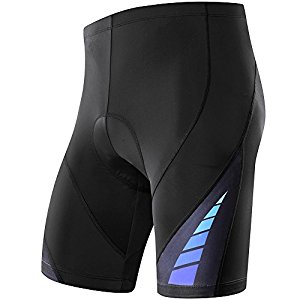 It may help if I clarify that I made a value choice when I ordered these bike shorts. I’m not a competitive biker and was not looking to pay top dollar for a slight performance edge or for the panache of a high-dollar brand.
 Well constructed, comfortably fitting, good looking, apparently durable solution for the cyclist’s feet during log rides. Note that they are slightly higher above the ankle than some similar socks.
 These accessibly priced wireless earbuds are so far beyond earlier solutions I’ve tried that it’s difficulty to consider them members of the same category.
 Why has it never before occurred to me to buy ‘glasses straps’ in quantity instead of holding on to the old one until it had all the zippy tautness of a deceased night-crawler?
 This marvelously versatile and well-conceived tool is perfect for small to medium adjustments at home and even as an on-ride security blanket for those who fear the worst when the wheels are rolling.
 I had to stare awkwardly at my shoes for a while before springing for this Thule product when others that cost less were available. But I figure I’ll likely own only one of those puppies, which reduces the window for recovery from a bad choice. So I sprang not only for the Thule but for the three-bike as opposed to the two-bike option.
 The very first words of the product description read ‘Easy entry and exit due to a fluoropolymer material …’ and I’m finding this to be true after two weeks of debuting these Look KEO cleats. They’re significantly easier on this front than my previous cleats. As a relative novice on a road bike, I’m finding this feature to be useful in avoiding needless and embarrassing low-speed Road Rash.


 Canter Bridge