I had often heard of ‘Ernie Pyle’ from people who had been around to read his newspaper columns during ‘The War’ and—more often—from those whose parents had done so. But it was not until a solemn stroll through Honolulu’s National Memorial Cemetery of the Pacific brought me unexpectedly upon Pyle’s gravesite that he became a real human being to me. Ironically, for me he was humanized in his death. It is a sentiment that Pyle might have been expected to appreciate, for he humanized the American fighting man and woman precisely in their deepest extremis.
I immediately ordered this remarkable collection of Pyle’s columns, filed from a very mobile front as it made its way across Europe and towards Berlin.
It took a bit of time for Pyle’s writing to grow on me. His vocabulary, his pacing come—after all—from a different generation’s English. But grow on me it did.
By all accounts a complex man and by some accounts a troubled one, Pyle shines no light in these dispatches on himself. His singular focus is on the American GI and sailor. The title of this compilation might suggest a romantic touch. Yet romance is not what Pyle brought to war, and certainly not to his supremely empathetic picture of the American warrior in an epic conflict that not one of them had invited to interrupt his life.
I am tempted to say that every American school child should be required to read this book.
But that will never happen, and is hardly worth the words.
The good news is that some of us, more often than not those who have slowly grown to appreciate the citizen soldier with all his warts, will pick up and read this extraordinary collection of journalistic snapshots. Some of us will pause quietly at the end of one or more of the book’s 35 chapters. To wonder, perhaps, how we would have performed under similar duress. To honor those who endured. To grieve those who did not.
 In his introduction to The Coldest Winter, the author alludes to the ‘colossal gaffe’ of Secretary of State Dean Acheson’s omission of South Korea when drawing America’s Asian defense perimeter. Sadly, the Korean Conflict was to offer a strong roster of competitors for ‘greatest colossal gaffe’ status. Per Halberstam’s statistics, the chaotic war without the title would claim 33,000 American lives alongside of 415,000 South Koreans and perhaps a million and a half Chinese and North Koreans.
 The Rough Guide to Colombia is no exception. It may well be the best of its kind for Colombia. Why do I say this?
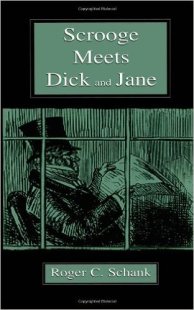 It is the practitioners of education-as-preparation-for-test-taking who absorb the blows of the author’s satire. The Yale University Admissions Department and the Educational Testing Service stand in for the broader industry.

 The Medellín Travel Guide‘s strength is that its author has followed the people of the city he surveys in putting Medellín’s regrettable notoriety firmly in his rear view mirror. Though Lee references the bad old days when the city writhed under the rule of its drug lords—and even places the Pablo Escobar Tour first on his list of ‘Top Nine Things to Do’—he clearly loves Medellín as it is today. His enthusiasm is catching.
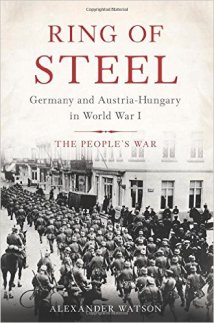 Alexander Watson’s 2014 tome massively documents the rope’s tightening around the neck of Germany and the Austro-Hungarian Empires during the 1914-1918 war. It makes the abstraction we call ‘encirclement’ personal, horribly so for the peoples dragged into a conflicted they alternately longed for and loathed.


 Canter Bridge