Here in Indianapolis, the sun will set on the year 2016 in ten minutes. And counting.
It has been an extraordinary year, both personally and for our human race.
When it has not driven us to distraction or drawn despair too near for comfort, it has thrown up glimpses of new things and fresh possibilities. It’s an easy thing to say, bereft of historical discipline, but I’ll say it anyway: This has been a year like no other.
Meanwhile, the Bible’s last chapter reminds me that we are neither the first nor perhaps the last to groan for a day with no darkness, a year’s end with no threatening penumbra.
And night will be no more. They will need no light of lamp or sun, for the Lord God will be their light, and they will reign forever and ever. (Revelation 22:5 ESV)
The seer John’s vision of a life-giving proximity to ‘the Lord God’ that removes mediation is part of a wider vision that is continuous with what we know here and now, but relieved of the Curse that afflicts us.
Then the angel showed me the river of the water of life, bright as crystal, flowing from the throne of God and of the Lamb through the middle of the street of the city; also, on either side of the river, the tree of life with its twelve kinds of fruit, yielding its fruit each month. The leaves of the tree were for the healing of the nations.No longer will there be anything accursed, but the throne of God and of the Lamb will be in it, and his servants will worship him.They will see his face, and his name will be on their foreheads. And night will be no more. They will need no light of lamp or sun, for the Lord God will be their light, and they will reign forever and ever. (Revelation 22:1–5 ESV)
All is provided. Nothing lacks.
All is pure and clear, all is life.
No more night.
 In his introduction to The Coldest Winter, the author alludes to the ‘colossal gaffe’ of Secretary of State Dean Acheson’s omission of South Korea when drawing America’s Asian defense perimeter. Sadly, the Korean Conflict was to offer a strong roster of competitors for ‘greatest colossal gaffe’ status. Per Halberstam’s statistics, the chaotic war without the title would claim 33,000 American lives alongside of 415,000 South Koreans and perhaps a million and a half Chinese and North Koreans.
 The Rough Guide to Colombia is no exception. It may well be the best of its kind for Colombia. Why do I say this?
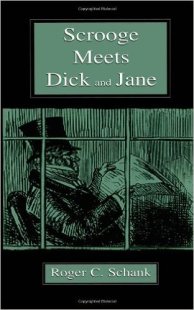 It is the practitioners of education-as-preparation-for-test-taking who absorb the blows of the author’s satire. The Yale University Admissions Department and the Educational Testing Service stand in for the broader industry.

 The Medellín Travel Guide‘s strength is that its author has followed the people of the city he surveys in putting Medellín’s regrettable notoriety firmly in his rear view mirror. Though Lee references the bad old days when the city writhed under the rule of its drug lords—and even places the Pablo Escobar Tour first on his list of ‘Top Nine Things to Do’—he clearly loves Medellín as it is today. His enthusiasm is catching.
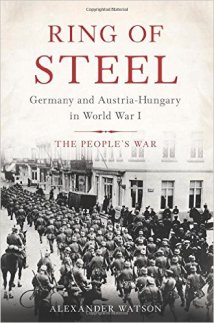 Alexander Watson’s 2014 tome massively documents the rope’s tightening around the neck of Germany and the Austro-Hungarian Empires during the 1914-1918 war. It makes the abstraction we call ‘encirclement’ personal, horribly so for the peoples dragged into a conflicted they alternately longed for and loathed.


 Canter Bridge