This book is one part exhortation and … well, just one part exhortation.
The editing is abysmal and the content idiosyncratic and unhelpful.
I cannot doubt the author’s good intentions.
Posted in reseña on December 15, 2016| Leave a Comment »
This book is one part exhortation and … well, just one part exhortation.
The editing is abysmal and the content idiosyncratic and unhelpful.
I cannot doubt the author’s good intentions.
Posted in reseña, turning the fly on December 15, 2016| Leave a Comment »
Steve Maslar’s Small Stream Trout Fishing is a very basic primer for the trout fisherman who might think the true sport is only to be had in the larger rivers with the big names.
Not so. Fly fishing can also be a huge and worthy challenge in the smallest of waters.
 will get you thinking along those lines. Then you’ll need practice or another book.
This is 101, basic stuff.
Posted in reseña on December 15, 2016| Leave a Comment »
Don’t let Aviya Kushner fool you.
This not a book about grammar or words, though there is plenty of succulent discussion of both in this remarkable offering from a young Jewish writer and teacher.
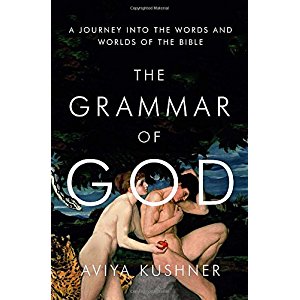 It is principally a sustained reflection upon memory and how to remember well.
Kushner writes from a tradition that treasures remembering as the last bulwark against disaster. She is a master chronicler of the memory craft, passed on to her by parents who did not grow weary of arguing about words, the tradents of memory, the traditioners of a people, the access to a God who for all of us uncanny evasiveness both speaks and is spoken about.
From the idiosyncratic and unpromising project of laying biblical translations beside each other in coffee shops in Iowa, New York, and Tel Aviv, Kushner spins a tale of the richness of words, the promise and portent of language that yields its treasures only to those who linger long with it, and her undying affection for a family that taught her to love words before it she made her way to … well … to Iowa.
The author treats us to reflections on:
√ Love
√ Laughter
√ Man
√ God
√ Law
√ Song
√ Memory
√ How It (Never) Ends
Her ruminations are rooted in the Bible (Hebrew and English), in the commentary of rabbis (early and medieval), and in the dinner-time rows of a family that argued as it ate. About words. About God. About matters both penetrable (if you harry them hard enough) and eternally impenetrable.
The truly frightening thing about Aviya Kushner’s The Grammar of God is that it appears to be the proverbial first book from the pen of this gifted writer.
After a beginning this good, what might she get up to next?
Posted in reseña on December 15, 2016| Leave a Comment »
Even as I write that this massive compendium is ‘the go-to course for the non-financiaI-professional non-profit leader’, I worry that I am damning Financial Management for Nonprofit Organizations by faint praise.
There is a strong argument that this is work around which non-financial-professionals and financial professionals in any non-profit ought to rally, to derive their shared understanding and dialect, and to establish common a financial platform for organization-wide strategic planning.
John Zietlow has been a persistent and influential voice in favor of nonprofit planning that abandons a debilitating ‘break-even’ philosophy and aims to build a tactical and strategic reserve. That understanding of a viable future for nonprofits its baked into this encyclopedic manual for nonprofit financial management.
I don’t think there is another resources that competes with this text.
Highly recommend by this veteran of the nonprofit wars.
Posted in reseña on December 15, 2016| Leave a Comment »
Because genealogy is a technology-driven project and because technology changes so fast, writing this book took some bravery.
The threat of technological obsolescence is always the wolf at the door. However, in preparing this review in December 2016, I note that an updated (2015) version is now available. So the author appears to be making an effort at keeping his published work current.
 I believe the best way to employ this book is an as an ‘idea mine’. Scan it often and quickly for ideas that will jump start or add greater depth to your own genealogical inquiries. Even if only one of ten ideas pans out as worth pursuing, that’s a pretty good result.
The field of popular genealogy seems to offer a lot of techniques. But the best outcomes seem to occur when people simply probe at this possibility then that one, constructing by trial and error a greater understanding of their family legacy. Thomas MacEntee’s work may well prove a useful ally in that cause.
Posted in reseña on December 15, 2016| Leave a Comment »
Noah Beck’s The Last Israelis captures the fear of apocalypse that is at the core of some Israeli political policy discussion and much American understanding of that one might call the ‘Israeli predicament’.
Beck is at the front edge, rather than the middle or the late/mature chapter, of his career as a novelist. His characters are sometimes thin, even brittle, but this does not keep him from telling a riveting tale.
His characters manage to exemplify many features of contemporary Israeli demographics, and to undermine reductive myths about what ‘Israel’ and ‘Israelis’ are like. Exhibit A: Israeli submariners of divergent origins cite their rabbis an debate that runs for and against preemptively annihilating their Persian foes.
The fact that serious people live with the fears that motivate this novel should be enough to give The Last Israelies a toehold on your reading list. The fact that it’s a page-turner of a read might get it up and over the hump.
Posted in Americana, reseña on December 15, 2016| Leave a Comment »
Rarely do I come away from reading a book with the sense that form has perfectly matched function and that the book has changed my mind.
Both of these things are true of Donald Kraybill’s, Karen Johnson-Weiner’s and Steven Nolt’s bravely titled The Amish.
 True to its subject, the book is a gentle read. It invites the reader into to increasing levels of understanding of this odd people, The Amish. Though it brings to bear upon its topic social-scientific, historical, and religious-studies rigor, it does so with a profound respect for the Old Order Amish themselves. As a result, the Amish come into clearer focus as fellow human beings who have chosen a certain lifestyle in a world that offers them alternatives. Caricatures fade amid the careful instruction of the authors.
The authors divide 21 rich chapters among five sections: I. Roots, II. Cultural Context, III. Social Organization, IV. External Ties, and V. The Future.
In the view of this reader, the authors’ Big Idea is remarkably simple: the Amish are not anti-technology, anti-modernity, or for that matter anti-anything.
Rather, with a view to preserving certain non-negotiable values, the Old Order Amish self-consciously negotiate the degree to which they will engage the offerings that a modern and post-modern world would thrust upon them.
When I was growing up on the boundaries of the Amish in Central Pennsylvania, it was common to snicker at the hypocrisy of this strange tribe. They would not have phones in their home, but would sneak down to the phone shack at the end of the driveway to make their calls. They would not own cars, but would contract ‘English’ drivers to haul them about.
Kraybill and his co-authors explain that ‘hypocrisy’ is an unpromising explanation for such admittedly negotiated solutions. Is it not closer to reality on the ground to understand that the Amish may treasure uninterrupted and intentional family life in a way that makes using the phone a choice (though it may involved walking 100 yards through the snow) rather than a mindless response whenever the thing decides to ring in the bosom of the family’s space? Gently (there’s that word again), the authors lead one to see the sense of such a complex network of negotiated settlements with a wider world that has made other choices.
Though the authors clearly admire the Old Order Amish, they are realistic about the challenges any community (in this case, a broad network of distinct and interlocking communities) faces in a world where the mainstream declares itself both obvious and inviolable.
The Amish is a work of gentle history, a moniker I choose not chiefly because the object of the authors’ research is a people attempting to remain gentle, but rather because the authors have demonstrated that history and sociological analysis need not reduce the human objects of their research to less than they are. In real life. Quietly. Along the margins of our frenzy.
Posted in reseña on December 15, 2016| Leave a Comment »
I first met Tremper Longman’s brilliantly simple (I choose the dual descriptors carefully) introduction to reading the Psalms back when I needed it most. I was preparing to teach the Psalms for the first time in a burgeoning Latin American seminary and was appropriately scared stupid.
Since then I have taught the Psalms many times and in many locations. I’ve yet to find a better English-language introduction for the serious reader of the Psalms that this work.
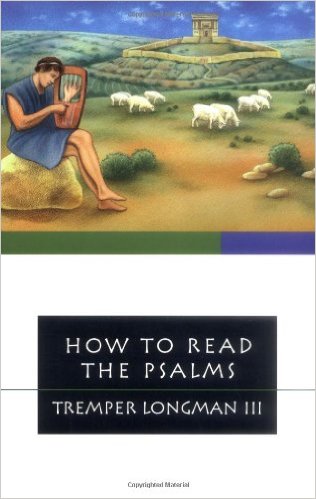 The strength of How to Read the Psalms, in my view, is the careful attention to the various genres or sub-genres of the psalms. It gives readers a doorway into an otherwise confusing morass of 150 poems. It draws on the best technical Psalms scholarship but it comes across to the reader as a helpful mentor rather than a technical geek. Longman also gives carefully selected and therefore helpfully illuminating examples from the Psalms themselves.
In my experience and that of many students, one comes away from reading the Psalms along side Longman’s manual both more intelligent as a reader of the psalms and more worshipful as a co-prayer with the authors of the psalms.
Though a bit long in the tooth, Tremper Longman’s introduction to reading the psalms has endured and, even better, stayed perennially fresh.
Posted in Americana, fortus in arduis, reseña on December 15, 2016| Leave a Comment »
Robert E. Jone’s frequent and almost thematic mention of the storied division’s ‘rendezvous with destiny’ combines with his subtitle (‘The first fifty years’) to suggest that he believes he and his co-authors have written the preface to continued achievements by the Screaming Eagles. The six years that have passed since this book’s 2010 publication debate suggest that his intuition was more than merely loyalty to a storied military unit.
 In the book’s eloquent preface, Major General Francis L. Samson (Chaplain, USA, Ret.) writes that ‘Sherman was not quite right when he said “War is hell,” for in hell there is no compassion, no love, no generosity, no empathy for the suffering. I believe most firmly that the American serviceman (and service woman) in combat exemplifies more than any segment of our society the virtues of love, of self sacrifice, of courage and of fortitude in the face of danger and death”.
It is this story of non-hell at the gates of hell itself that Jones and others weave competently in four chapters that correspond to the 101st’s birth as the storming of Fortress Europe was on planners’ desks through to the development of the concept of Air Assault and its deployment in Desert Shield and Desert Storm. A fifth chapter presents the formal citations of Screaming Eagles who were awarded (sadly, many posthumously) the Medal of Honor.
The book’s reader will be best placed to absorb the often riveting history of the Scream Eagles if he or she has at least a modest command of ‘U.S. Army dialect’, for Jones does not pause to explain or to collect stragglers. In his story, the 101st was often ‘in first’ when nearly impossible—or at least profoundly unfamiliar—military challenges faced the nation’s civilian masters. This is a tale of rising to the challenge, of finding oneself equal to them, then of returning to one’s barracks knowing that the full story will only rarely be fully known or appreciated.
The book’s style is uneven, perhaps owing to the reality of multiple contributors that is revealed only by small-font attribution at the beginning of each chapter and in the appreciation that constitutes the volume’s concluding pages. The first chapter, ‘World War II’, provides the volume’s finest narrative. It is striking to be reminded how late in the conflict the 101st was created and brought to bear upon Europe’s darkest moment. The epic conflict in the European Theatre is too easily read as an inevitable ‘fait accompli’, for the modern reader knows how it ended. But the men of the 101st, thrown in to experimental modes of warfare as the ‘first to try’, did not. Over and above the massive emphasis on training that Jones chronicles, the newly airborne infantry experimented and adapted and re-thought convention in real time as the politicians and the generals (who by many modern accounts were not the heroes of WWII) did their best to get to Berlin and end this thing.
If Jones’ treatment of WWII represents the book’s best writing, his chapter (the author is actually John L. Burford) on ‘The Training Years’ turns over the soil that is most peppered with surprises. The nation was still weary of war and—beneath the general terror regarding a thermo-nuclear exchange—averse to thinking much about the possibility of its renewal. Yet at the 101st’s Fort Campbell (Kentucky) and a network of collaborating bases, planning for a new kind of mobile warfare continued apace, concealed from civilian life more often by a veil of apathy than of any active attempt to remain hidden. The skies, mountains, and cow pastures of Kentucky and North Carolina played host to Screaming Eagles on planning maneuvers more often than anyone but the locals who sometimes gathered to cheer them on cared to know. Yet these exercises allowed the chiefs of a reconfigured U.S. Army a sense for the potent force that, should its promise be developed and eventually deployed, would allow the newest superpower to order a confusing world at least partially according to its whims.
‘Vietnam’ (Chapter Three, by Gary Linderer) makes for a sad read. Linderer’s take alludes to but strongly counter-argues the reigning mythology of an underperforming military fragging its officers, smoking its weed, and generally exporting America’s worst decadence to a country whose name has been unrecognizable ‘back home’ just a few years earlier. The style is that of an expanded series of after-action reports, in which purposeful movement of helicopter-borne troops wreaked general havoc on the Viet Cong (VC) and the North Vietnamese Army (NVA), with occasionally helpful support from its allies in the Army of the Republic of Vietnam (ARVN). Yet despite the detectable stiff upper lip and military deference to civilian authorities that pervade Linderer’s story, one senses the growing critical mass of political indecision that turned the 101st’s performance in Vietnam into one summarized by a tone of ‘We did what we were told and we did it well, but …’. The author of this chapter allows his feelings to be glimpsed when he notes, laconically, that it was difficult for the solider in the jungle to sustain morale and high performance when President Richard Nixon had so clearly decided to end the war. The notion of becoming the last casualty has limited appeal.
During the warn abbreviated as ‘Vietnam’, the nation was grotesquely divided as to its purpose (or the absence of one) in Southeast Asia. How could those at the point of the spear endure the dilemma that was thrust upon them. Yet they did endure and, if Linderer’s story is read for its face value, they left a mission that became dire with the pride that comes from having met one’s rendezvous with destiny gamely, professionally, and without leaving anyone necessarily behind.
The story of the first Gulf War (Desert Shield and Desert Storm) provides the book’s most tactically gripping (Chapter Four: Air Assault, by Thomas H. Taylor) entry. What looked on CNN like an unmitigated romp through the desert turns out to have been built upon the scaffolding of bold and intricate plans that produced a gripping run of cliff-hangers before Saddam Hussein’s goose could finally be pronounced cooked.
The final chapter (Chapter Five: Medal of Honor Recipients) sustains the declaration in the preface that war is not yet hell. But nor is war far from that dark and hopeless doorway. One reads with a heart heavy for fallen soldiers whose best-lived moments were, more often than not, their last.
The book is marred only by a curious frequency of misspellings.
As a matter of full disclosure, this reviewer should disclose that he has no military training or experience (in case this isn’t supremely evident already!) and that he is the admiring and prayerful father of two sons who currently serve as officers among the Screaming Eagles of the 101st Infantry Division (Air Assault). These men serve regularly in places whose names may serve as chapter titles for this book’s sequel.


 Canter Bridge